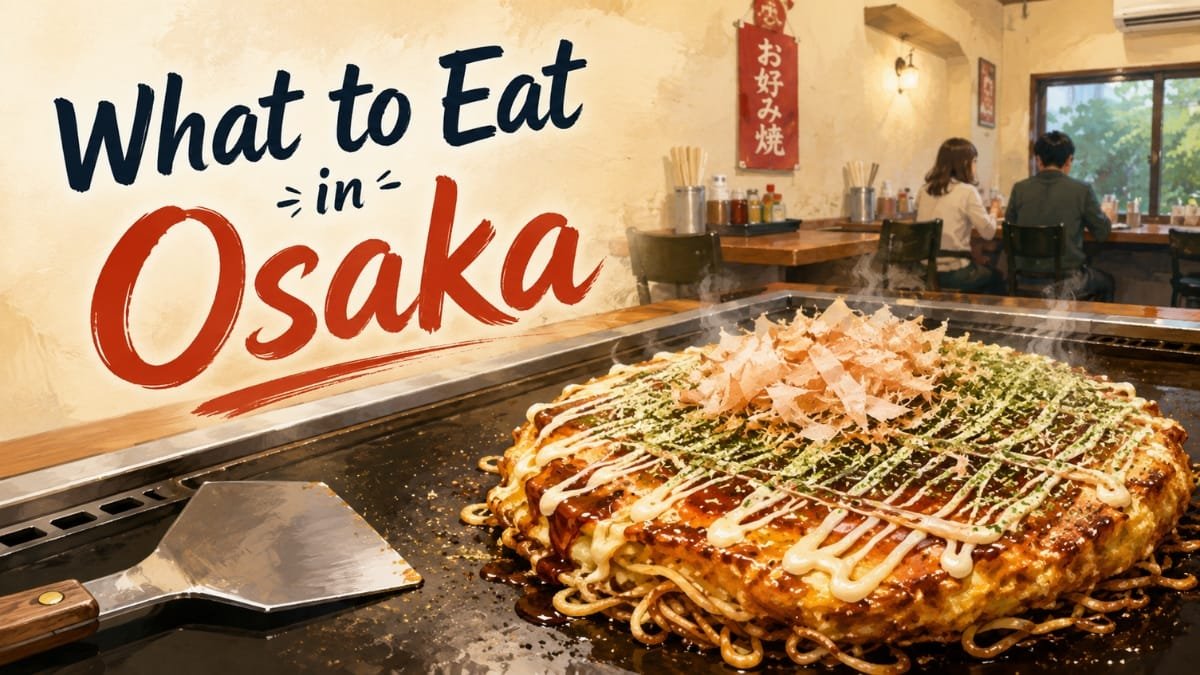
You do not need to eat all ten foods on this list to understand Osaka. A better first-trip plan is to choose one quick snack, one sit-down dish and one quieter comfort food. That gives you three different sides of the city without turning every meal into a checklist.
Start with the eating format you want. Takoyaki is fast and iconic. Okonomiyaki or negiyaki makes the griddle part of dinner. Kushikatsu is a social meal built from several fried skewers. Kitsune udon and nikusui work when you want warmth without another large plate of fried food.
Pick the dish that fits this meal
| Osaka food | What arrives | Flavor and texture | Best fit | Know before ordering |
|---|---|---|---|---|
| Takoyaki | Round batter bites with octopus | Savory, soft and extremely hot inside; toppings vary | A quick snack to share | The center may be creamy rather than bread-like. Let the first piece cool. |
| Okonomiyaki | A cabbage-rich griddle cake with your chosen fillings | Savory, soft inside and browned outside | A filling sit-down lunch or dinner | Pork, seafood, egg and wheat are common; one portion can be a full meal. |
| Kushikatsu | Breaded, deep-fried skewers ordered one by one or as a set | Crisp coating with meat, seafood or vegetables inside | A casual meal with variety | Sauce service and ordering rules differ by shop; shared fryers are common. |
| Negiyaki | A thinner griddle cake led by chopped green onion | Fragrant, savory and less cabbage-forward than okonomiyaki | A griddle meal when you want a sharper onion flavor | It can still contain wheat, meat, seafood or egg; “lighter” does not mean restriction-friendly. |
| Kitsune udon | Udon noodles in broth with sweet seasoned fried tofu | Soft noodles, sweet tofu and clean savory broth | A warm, low-friction lunch | Pale broth can still contain fish-based dashi, or stock. |
| Doteyaki | Beef tendon simmered in a sweet-savory miso sauce | Rich, sticky and tender to chewy | A small plate with drinks or kushikatsu | It is beef offal with a gelatinous texture, not grilled steak. |
| Nikusui | Beef soup; the best-known version omits the noodles from meat udon | Clear broth, thin beef and a soft egg | A warming meal around Namba | The name is nikusui. Recipes and egg doneness vary by shop. |
| Butaman | A white steamed bun filled with seasoned pork and onion | Fluffy outside, juicy and savory inside | A station-area takeaway snack | Eat it where food is permitted; the aroma is strong in enclosed transport. |
| Horumonyaki | Grilled offal, ordered by cut or as a mixed plate | Smoky, fatty, springy or chewy depending on the part | Confident eaters who enjoy varied textures | Ask which animal and cut you are ordering, and follow the shop’s cooking instructions. |
| Oshizushi / box sushi | Vinegared rice and prepared toppings pressed into neat blocks | Compact, seasoned and more integrated than nigiri | A regional takeaway or calmer meal | “Sushi” does not guarantee raw fish; toppings and allergens vary. |

The table is a starting point, not a ranking. If a dish already fits the neighborhood and time of day in your plan, that convenience usually matters more than crossing Osaka for a famous sign.
Three griddle foods that are easy to confuse
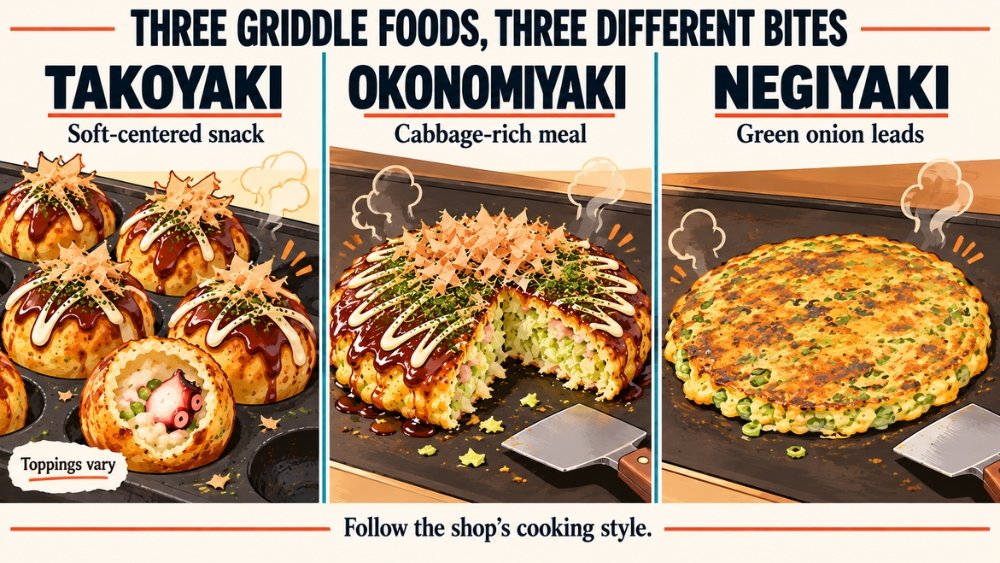
Takoyaki, okonomiyaki and negiyaki all use batter and a hot cooking surface, but they create three different meals.
Takoyaki: a soft-centered snack
Takoyaki is cooked in a metal plate with round molds. Each piece holds octopus inside a loose, seasoned batter. A well-made batch may have a lightly browned skin while remaining almost molten in the middle. That softness is intentional; do not wait for the texture of a fried dough ball.
The standard picture of takoyaki covered with dark sauce, mayonnaise, green aonori and moving bonito flakes is only one version. Aizuya’s official history documents an earlier Osaka style designed to be eaten without sauce because the batter itself is seasoned. Its pieces are smaller and pale golden rather than buried under toppings. The useful lesson is simple: read the menu before assuming every shop serves the same finish.
Takoyaki traps steam. Open the first piece with a pick or chopsticks, wait a moment, then try it. If you are sharing, order one portion first; the dish is easiest to enjoy while hot, but not straight from the mold.
Okonomiyaki: a complete griddle meal
In the Osaka style most visitors encounter, chopped cabbage, batter and fillings are mixed before cooking. Pork belly is common, while squid, shrimp, mochi, cheese and mixed combinations also appear. A dark savory sauce and mayonnaise may finish the top, but recipes are shop-specific.
This is usually a meal rather than a snack. Adding noodles makes it heavier, so decide whether you want okonomiyaki alone or a shared order with yakisoba. Some restaurants let guests cook; others cook at a central griddle and place the finished pancake on the hot plate in front of you. Follow the staff rather than reaching for the spatulas automatically.
The iron plate stays hot after the food arrives. Keep bags, sleeves and children away from the edge, and move each bite to the small plate if you want it to cool.
Negiyaki: green onion is the point
Negiyaki is related to okonomiyaki, but chopped green onion supplies the dominant flavor and visible green color. It is often thinner, with a soy-based finish rather than the full sauce-and-mayonnaise treatment associated with many okonomiyaki shops.
That does not make every negiyaki light or vegetarian. Negiyaki Yamamoto’s current main-store menu includes versions with beef tendon, pork, squid, shrimp and scallop. The shop identifies itself as the birthplace of negiyaki; its main store is in Juso, while branches in Umeda and Shin-Osaka can fit more easily into some itineraries.
Choose negiyaki when you specifically like green onion and want a griddle dish that tastes different from cabbage-led okonomiyaki—not merely because it sounds smaller.
Kushikatsu: check the sauce setup before the first bite
Kushikatsu covers meat, seafood, egg and vegetables in fine breadcrumbs and fries each item on a bamboo skewer. Sets remove the language work; ordering individually gives you more control over ingredients and quantity.
The famous “no double-dipping” rule is real where diners share a sauce container. Kushikatsu Daruma’s current guide still says not to return food to its shared dark-brown sauce after taking a bite. But that is not a universal description of every Osaka shop. You may instead receive a squeeze bottle or an individual dish.
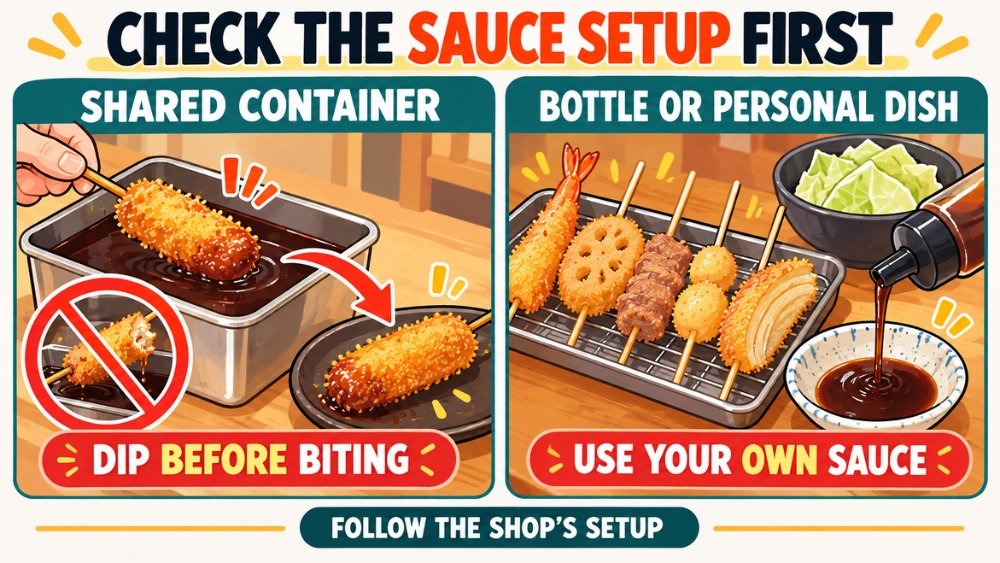
Use the setup in front of you:
- Look for an English sign or watch the staff’s explanation before eating.
- If the container is shared, coat the skewer before the first bite and do not return a bitten piece to it.
- If you receive a bottle or personal dish, add sauce there instead.
- Put finished skewers in the holder or area the shop provides.
The breading and fryer make kushikatsu difficult for severe allergies even when the item inside looks safe. Daruma’s allergen page lists wheat, yam and soy in its coating and beef in its frying oil; another shop may use a different recipe. Ask the actual restaurant rather than treating one chain’s list as an Osaka-wide standard.
Shinsekai is the classic area for pairing kushikatsu with doteyaki. The Shinsekai walking guide can help you place the meal into a route without circling the neighborhood while hungry.
Three warm dishes for a slower meal
Kitsune udon: simple does not mean plain
Kitsune udon combines thick wheat noodles, hot broth and a piece of fried tofu simmered until sweet and savory. Osaka broth is often amber and visually clearer than a dark soy-forward soup, but color is not a measure of intensity.
The unfamiliar term is dashi: Japanese stock, commonly made with dried bonito fish and kombu kelp. A bowl topped only with tofu and green onion may therefore still contain fish, and the tofu seasoning may contain soy and wheat. Ask about the broth when vegetarian, vegan or allergy requirements matter.
This is a practical lunch when you want a seat, warmth and a predictable single bowl. Udon noodles are soft by design in many Osaka shops; do not use firm Sanuki-style noodles as the only standard for judging them.
Doteyaki: rich beef tendon in a small portion
Doteyaki is beef tendon cooked until tender in a sweet-savory miso mixture. Depending on the shop, it may arrive in a small bowl or on short skewers, with green onion, mustard or chili. Expect glossy sauce and a gelatinous bite rather than the fibrous chew of a steak.
It works well as one shared side before ordering more fried skewers. Miso and seasoning can add soy, and shop recipes may also use dairy or meat stock. If texture is the main uncertainty, order one portion for the table rather than committing to it as dinner.
Nikusui: learn the correct name before ordering
The correct name to look for on menus is nikusui—literally “meat soup.”
Chitose, which says it originated the dish, describes its version as meat udon without the noodles: a blended bonito-and-urume fish stock with slightly sweet beef, a soft egg and chopped green onion. Tofu is optional. The shop also pairs it with kodama, a small bowl of rice topped with raw egg.
Nikusui is therefore not simply beef-and-onion soup, and it is not free of seafood or egg. It is a good Namba-area choice when you want a hot bowl but not udon. The original Chitose main shop is in Namba Sennichimae; its official page warns that service ends when the stock sells out, so do not make a late visit your only meal plan.
For more nearby options, see where to eat in Namba.
Three less obvious choices worth understanding
Butaman: a steamed pork bun, not baked bread
Butaman means a steamed bun filled with pork. The exterior should be white, soft and fluffy, with pleats at the top rather than a browned crust. The filling is savory and juicy.
551 HORAI’s official product page describes its version as diced pork and onion inside a slightly sweet dough. It also lists wheat, soy and pork among the relevant ingredients. Use that list for 551 only; other sellers can differ.
A hot bun is convenient, but “takeaway” does not mean “eat anywhere.” Step away from the sales queue, use a permitted eating space, and avoid opening a strong-smelling hot meal on a crowded commuter train. If you are saving buns for later, follow the seller’s storage and reheating instructions instead of leaving them in a warm bag all day.
Horumonyaki: ask about the cut, not only the sauce
Horumon means offal. A menu may include intestine, liver, heart, rumen and other cuts from beef or pork. Their textures are not interchangeable: one piece may be fatty and soft, another springy, another dense.
Ask which animal and cut you are ordering. At a self-grill restaurant, keep raw-food tongs separate from eating chopsticks if the shop supplies both, and cook each cut as instructed. Mixed plates are useful for variety but poor for diners who need exact ingredient control.
Choose horumonyaki because you enjoy offal and smoke from the grill—not because it is a test of whether you can eat “like a local.” Travelers who dislike fatty or chewy textures will learn more from a good bowl of nikusui or a piece of box sushi.
Oshizushi: Osaka sushi is not only nigiri
Oshizushi is pressed sushi. One Osaka expression is box sushi, in which seasoned rice and prepared toppings are compressed in a mold and cut into compact rectangles. The result is neat and integrated: topping, rice and seasoning meet in every bite.
Yoshino Sushi’s official box-sushi page lists prepared sea bream, grilled eel, thick omelet and shrimp, with mushroom and nori used inside. That is a useful correction to the assumption that all sushi means raw fish placed on top of rice.
Box sushi can be a thoughtful takeaway, but check the same-day consumption instructions and keep it out of heat. Yoshino Sushi is currently a weekday-oriented stop in Awajimachi; confirm the latest hours on its site before using the Google Maps location.
Ask about ingredients before the kitchen starts
Japan’s Consumer Affairs Agency notes that allergen information in restaurants and prepared-food outlets is not provided under the same mandatory system used for packaged processed foods. Its current consumer guidance for eating out also warns about unintended allergen contact.
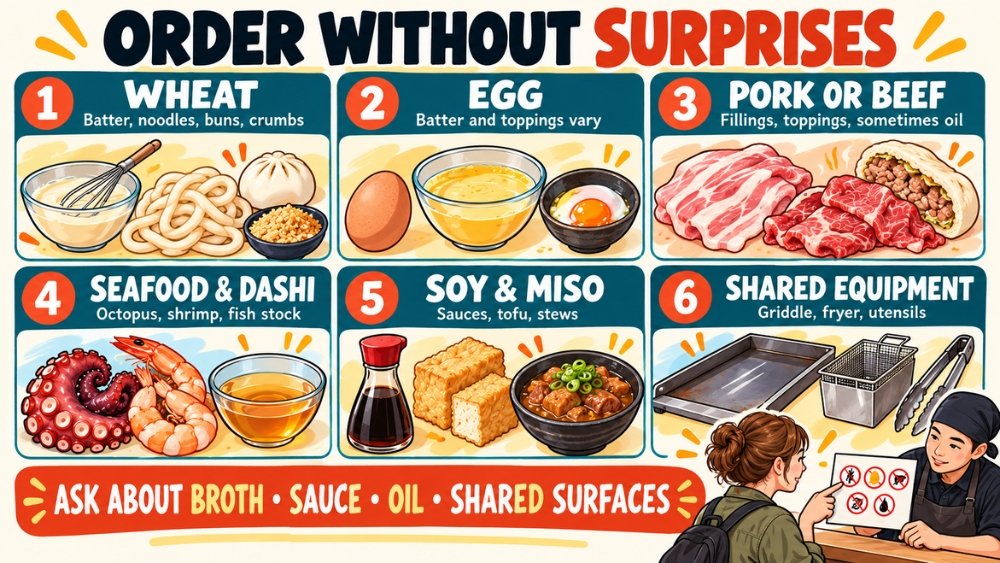
If a reaction could be serious, do more than point at one ingredient:
- Show a written Japanese allergy card before ordering and state whether trace contact is unsafe.
- Ask about broth and sauce, not just visible toppings. Bonito stock, soy sauce and meat stock can be hidden in simple-looking dishes.
- Ask about the shared fryer or griddle. Vegetable kushikatsu can share oil with seafood and meat; an egg-free order can touch the same cooking surface.
- Confirm wheat, egg, soy, pork, beef and seafood as relevant. They recur across batter, noodles, buns, sauces and fillings.
- Keep an alternative restaurant or packaged-food option in mind. A small kitchen may be honest that it cannot guarantee separation.
The same questions help vegetarian and halal travelers, although those needs are not identical to allergies. A vegetable topping does not establish what is in the broth, batter, sauce or cooking oil.
Build one Osaka food sequence, not a ten-dish race
A workable first trip needs only three decisions:
- Namba or Dotonbori day: split takoyaki as a snack, choose okonomiyaki or negiyaki for the main griddle meal, then keep nikusui for another lunch rather than forcing all three together. Our guide to exploring Dotonbori beyond the crowds helps with timing.
- Shinsekai meal: order a small kushikatsu set, add doteyaki only if the texture appeals, and stop before every skewer starts tasting the same.
- Umeda or Osaka Station transfer: use butaman as a controlled snack or choose a seated udon meal. The guide to eating near Osaka Station gives area-specific options.
- One regional takeaway: buy box sushi when you can store and eat it safely, rather than carrying it through a full sightseeing day.
For a broader comparison of markets, arcades and restaurant streets, use the Osaka food street guide.
The best first Osaka food is not automatically the rarest or the loudest. It is the dish whose format, ingredients and texture match the meal you actually need. Choose one snack, one griddle or fried meal, and one warm or portable counterpoint. That is enough to make Osaka taste specific without making the trip feel like work.