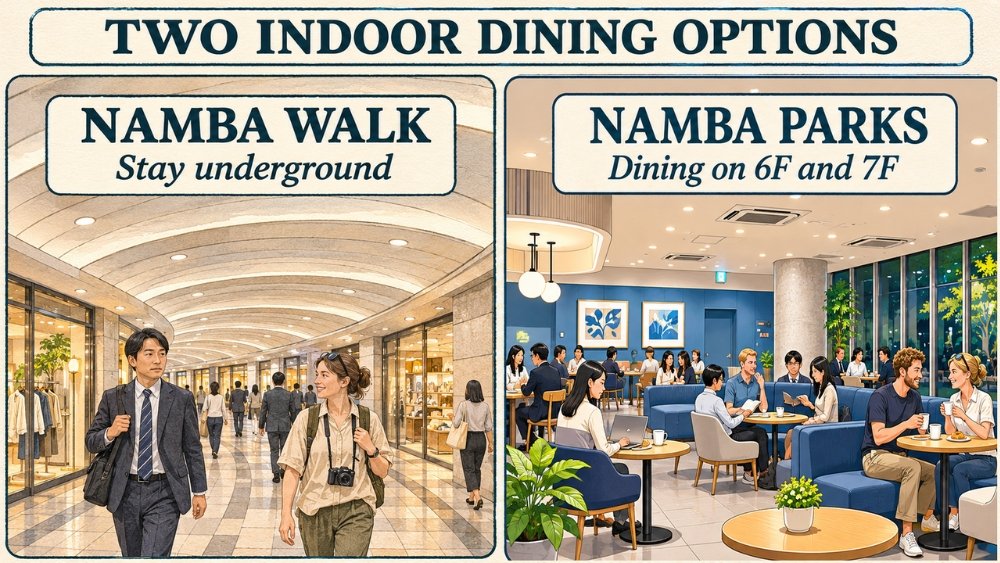
If you want a proper dinner near Dotonbori without spending the evening on the canal strip, start in Sennichimae. If you only want a few bites under the big signs, stay in Dotonbori. For an indoor meal, the useful distinction is Namba Walk near the subway and Osaka-Namba, or Namba Parks on the Nankai station side. Both are good options, but neither is close to every train called “Namba.”
Choose the side that fits the rest of your day. A quick bowl before the airport train, a table for four, and a snack on a night walk are three different meals.
Eat near the canal only if the atmosphere is part of the meal
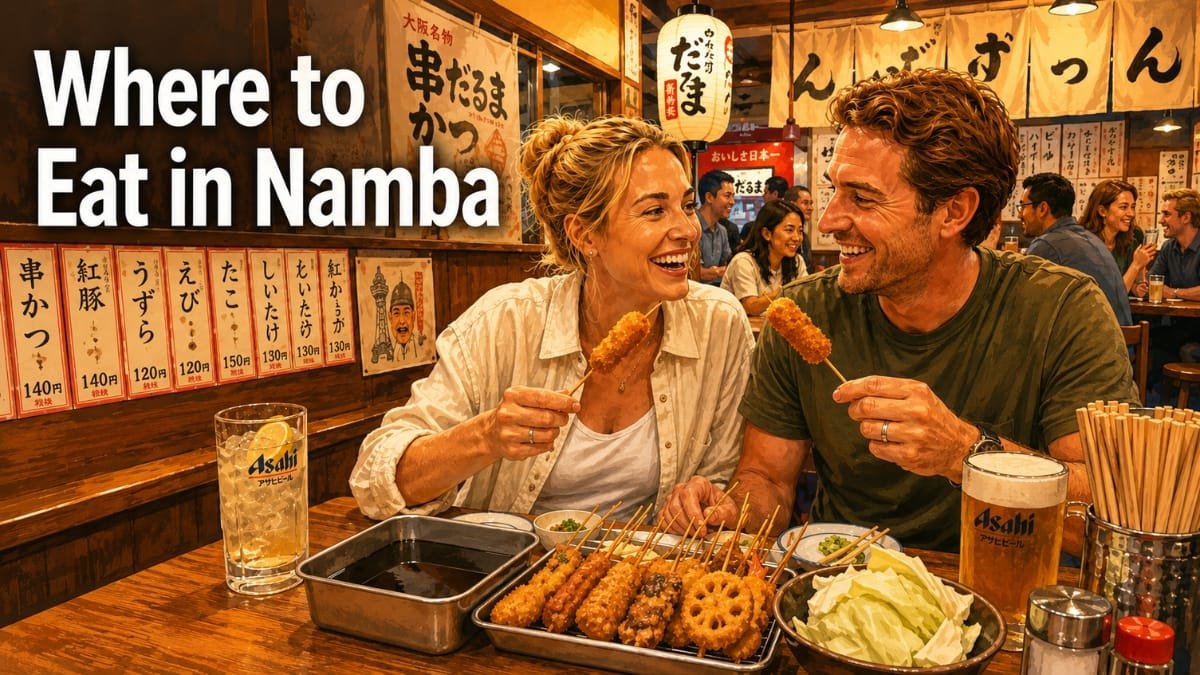
Dotonbori works when you want the signs, lights and something unmistakably Osaka on the same outing. Share takoyaki (batter balls with octopus) or sit down for okonomiyaki, a savory pancake cooked on a griddle. Crab, sushi, ramen and desserts are easy to look for here, too. A line in front of a famous shop might be worth it for that particular dish; it is not a reliable guide to price, portion size or how quickly you will get a table.
For a concrete snack stop, Kukuru’s Dotonbori main shop (map) lists separate takeaway and eat-in hours. If you want a seat, read the eat-in hours rather than using the later takeaway closing time. The Dotonbori walking guide explains where to go once you have eaten.
Sennichimae is a useful next move when your group wants different things. Walk south from the canal into the shopping streets (map). Look here for curry rice, ramen counters, a set meal with rice and side dishes, yakiniku (meat grilled at the table) or an izakaya (a casual pub that serves food). A counter is practical for one diner; if you want to talk across a table or fit a stroller, ask about seating before joining the line. The area is still busy at dinner, just less dependent on the canal strip.
For sit-down okonomiyaki, Chibo’s Sennichimae main branch (map) lists an English menu and a last-order time earlier than closing. Use the branch name: Chibo also has a Dotonbori location. If the group mainly wants to browse and taste a few things in daylight, Kuromon Market (map) near Nippombashi is another option. Look up the individual stall’s hours and whether it has an eat-in space; don’t count on the market as a late-dinner backup.
If you want to stay indoors, choose the right building
Namba Walk: an indoor stop on the subway side
Namba Walk (map) is an underground shopping and dining passage, outside the railway ticket gates. It is a practical choice in rain or heat, especially if you are already on the Osaka Metro or Kintetsu/Hanshin Osaka-Namba side. There are options such as cafés, casual chains and sit-down restaurants. The passage is long, so use the floor guide to choose a shop near your end rather than crossing the whole complex hungry.
The operator lists general dining and café hours of 10 a.m. to 10 p.m., with exceptions for individual shops and closure days. That does not mean every kitchen is open at 10 a.m. or still taking orders at 9:45 p.m. Underground dining also isn’t automatically cheaper: compare the actual menu and any set meal before sitting down.
Namba Parks: a table on the Nankai side
Namba Parks (map) is directly connected to Nankai Namba, the station used by Nankai’s Kansai Airport trains. Look at the sixth and seventh floors for sit-down options. The floor maps show lifts and restrooms, which can make planning easier with children, luggage or a stroller. They don’t tell you whether an individual restaurant has a high chair or room beside the table, so check the branch if those are must-haves.
The station side also has Namba CITY and department-store dining. Start close to your train if you need to leave on time. Namba Parks can be convenient for Nankai, but its own access guide puts it farther from other stations, including JR Namba. Allow for the lift ride and walk back to the gate. A meal in a mall can be the better choice for a tired group even if it isn’t the street-food experience you came to Osaka for.
Order for the meal you need
Takoyaki is a snack to share; choose another dish if it needs to stand in for dinner. Okonomiyaki makes a more substantial sit-down meal. Kushikatsu is food such as meat or vegetables breaded and fried on skewers. Check whether the prices are for individual skewers or a set. At Daruma’s Dotonbori branch (map), the official page also lists a one-drink requirement with an exception for elementary-school children and younger. That is a branch rule, not a rule for every skewer shop.
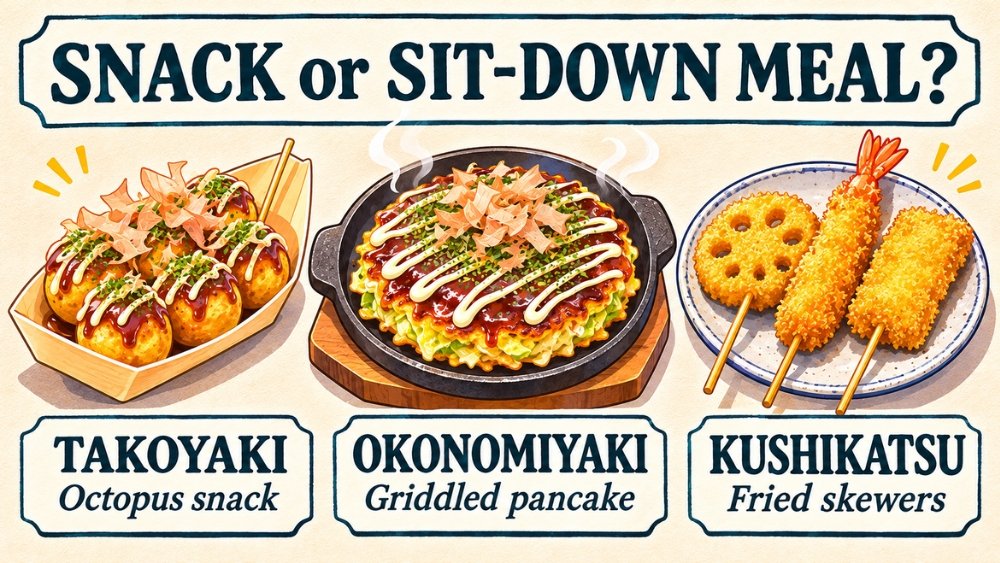
Ramen or curry rice can work when you want one dish and a quick stop. A yakiniku dinner usually takes more time, since your group grills the food as you eat. Compare individual dishes with any all-you-can-eat plan: the meat selection, time limit and price are not the same. Conveyor-belt sushi can make prices easier to see, but it isn’t the only option; use a branch that shows its plate prices and offers cooked items if someone avoids raw fish. If a child or jet-lagged traveler just wants familiar food, a bakery café, pasta or tonkatsu (breaded pork cutlet) is a perfectly good choice.
Work backward from the time you have
For lunch, try a little earlier if the place is already open. A set lunch can make the total easier to judge, especially if it includes sides you would otherwise order separately. For a weekend evening or a group that needs to sit together, check whether the branch takes bookings for your party size. Some places only take reservations at certain times or with a set menu. If you come late, look for last order or L.O., the time after which the kitchen stops taking orders. Closing time is not the same thing.
Read the menu at the door or on the restaurant’s own page before you queue. Look at the price of an actual meal, whether there is a required drink or set, and whether the line is for takeaway or seating. Photo menus, display models and tablets can help when you don’t read Japanese, but a picture doesn’t settle the price or ingredients. Carry some yen as a fallback. An IC card is a tap-to-pay transit card such as ICOCA or Suica; a shop may accept it, a credit card, both or neither. Look for the payment marks or ask before ordering.
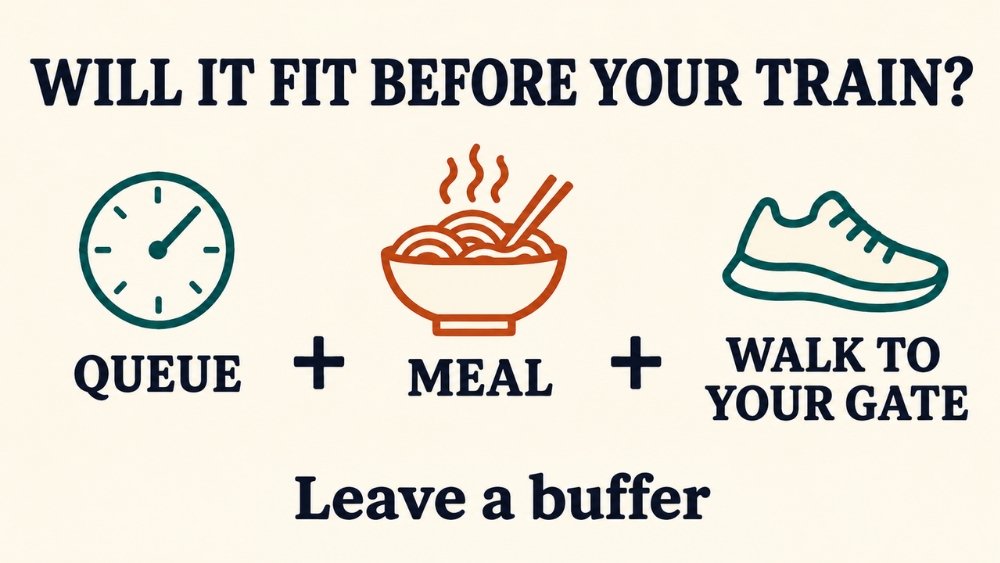
If you have a fixed departure, count the walk from the table to the actual gate, not from the restaurant to a generic station pin. Save the full station and operator name: Osaka Metro Namba, Nankai Namba, Kintetsu/Hanshin Osaka-Namba and JR Namba are distinct. If the line eats into the time you need for the walk, choose a faster meal or takeaway near the right gate.
If ingredients matter, ask before you queue
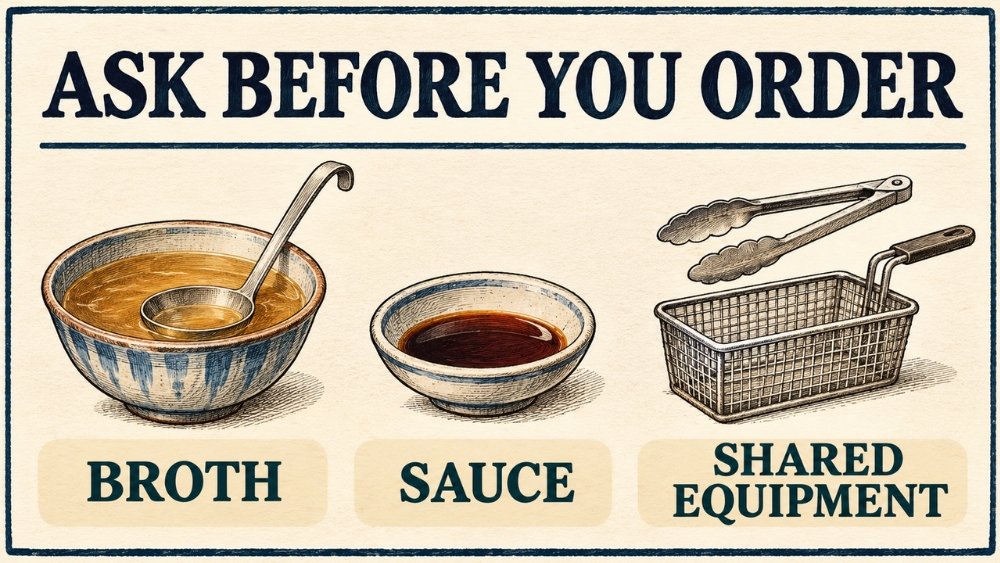
Dashi is a stock that can be made with dried fish as well as ingredients such as kelp or mushrooms. It can be in the soup or seasoning even when no fish is visible. Japan’s agriculture ministry gives a kelp-and-bonito example. If you eat vegetarian, vegan or halal, ask about the stock, sauces and preparation that matter to you, not just the main ingredient. A menu label can help you shortlist a place; it does not answer every ingredient question.
For a food allergy, show the exact ingredient in writing and ask separately about shared fryers, griddles and utensils. Even a dish made without that ingredient may come into contact with it in the kitchen. Japan’s Consumer Affairs Agency guidance on eating out with food allergies is a useful starting point. If a restaurant can’t verify the ingredients or preparation you need, choose a place that can answer clearly.
When a guided meal makes sense
A food walk is an option if you want a guide and several stops rather than a table you choose yourself. It is a scheduled activity, not a shortcut to dinner before a train. If you have a whole evening free, check the Dotonbori backstreets food tour on Klook for the actual meeting point, foods included, language, dietary requests and cancellation terms for your date. If you need a quiet table or firm answers about ingredients, booking a suitable restaurant directly gives you more control.