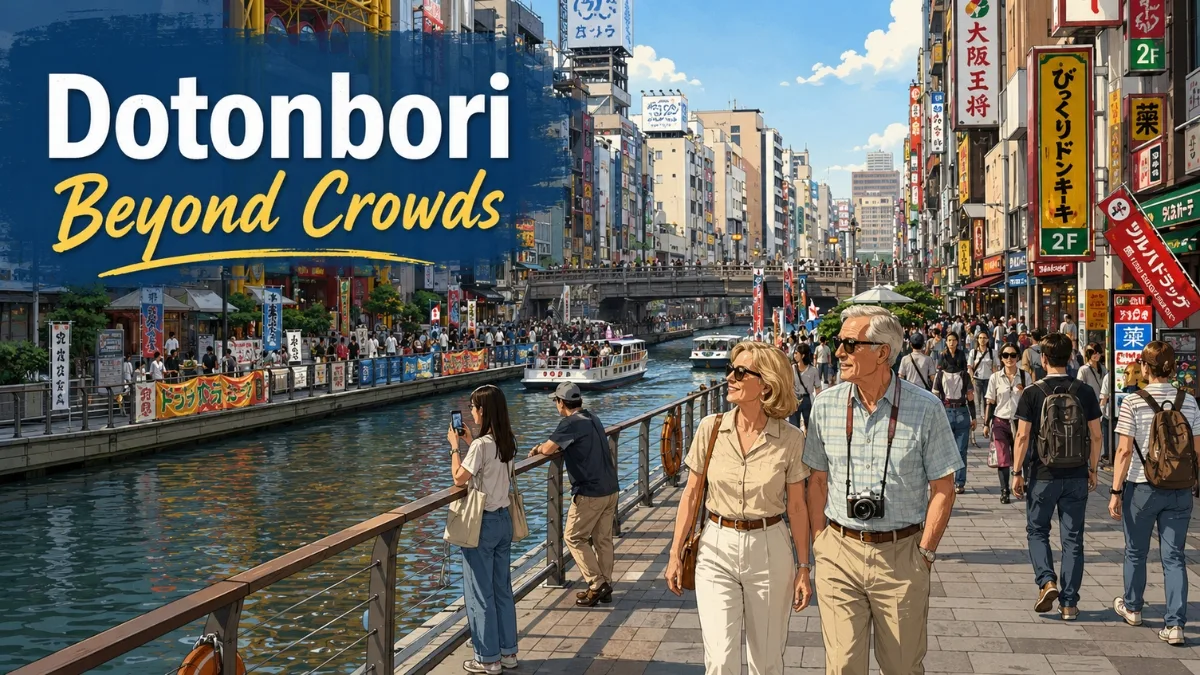
Stop at Ebisu Bridge for the view, then get off the bridge. Dotonbori is easier to enjoy when the famous crossing is one stop, not the place where you take every photo, meet your group and decide where to eat.
For a first visit, start before lunch if walking and photos matter most. Spend an hour on the bridge, a short stretch of the canal and a stop at Hozenji Temple. Allow two to three hours if you want a proper meal and time in the side streets. These are planning estimates; a restaurant queue or a cruise can change the pace. If you mainly want the neon, come after dark and give dinner its own plan.
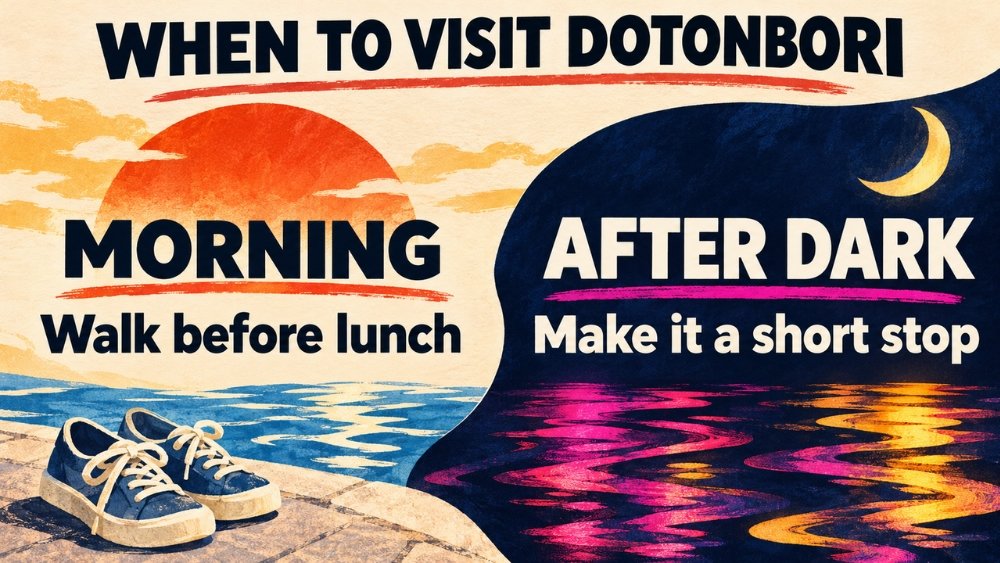
Pick the time for what you want to see
Morning is for walking. Try around 9:00 to 10:30 a.m. if you want daylight for photos and room to get your bearings. Treat that as a suggested window, not a crowd forecast. Restaurants and shops set their own hours, so have breakfast elsewhere if you are going early. Early afternoon can also work if you want shops and a temple stop on the same visit.
After dark is for the canal lights. Dinner queues and people taking photos make the same short distances feel longer, particularly on busy weekend or holiday evenings. If you are staying nearby, split the visit: take your longer walk by day and return for a short canal stop after dark. If you only have one evening, eat before the walk or choose a restaurant you can go straight to.
The Glico sign is the large running-man billboard seen from Ebisu Bridge. Glico lists its usual lighting from after sunset to midnight, subject to change. There is an exception for the renovation: Glico announced that the sixth sign is scheduled to come down after November 2026, with work starting in December and the seventh sign planned for spring 2027. If the runner is the photo you came for, use the announcement to check the timing. The canal and the rest of the neighborhood are still worth the walk.
Arrive on the side you want to explore
From the Osaka Metro Midosuji Line, use Namba Station Exit 14 for the bridge and Hozenji side. The Metro map may spell the area “Dotombori.” If you are starting on the east side, Nippombashi Station Exit 2, on the Sakaisuji and Sennichimae lines, puts you at the northwest corner of the Nippombashi intersection, near the canal. For Kuromon Market instead, the same station lists Exit 10.
From Nankai Namba Station, the airport train terminal, leave on the north side toward Namba Square. Follow the Ebisubashi-suji shopping arcade north to the bridge. Nankai Namba, Osaka Metro Namba, Osaka-Namba and JR Namba are different railway stops. Save the operator and the station you need for the return, not just “Namba.” If you have a suitcase or need a lift, use the station’s barrier-free route and choose your street-level starting point from there rather than assuming the nearest numbered exit has an elevator.
Change levels at the canal
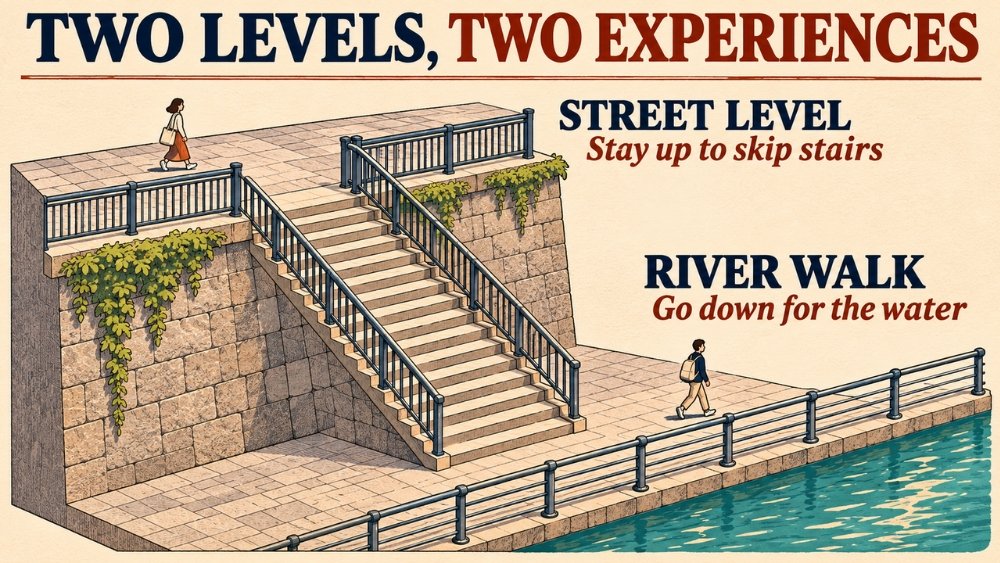
The restaurant street and the Tombori River Walk are not the same path. The river walk runs along the water below the street, with stairs down near Ebisu Bridge. At the lower level, you can look up at the façades and see the reflections without staying on the bridge. The walkway by the bridge and the boat pier can still be busy. Leave the top and bottom of the stairs clear; step out of the flow before you open your map or take a photo.
Go west for a change of pace. Walk toward Dotonbori Bridge and Daikoku Bridge, away from the densest cluster of signs around Ebisu Bridge. Make one bridge your turnaround point, or continue toward Horie at street level. Go east if Nippombashi is next. The route passes the Tazaemonbashi area before reaching Nippombashi Bridge; it makes more sense than returning to Ebisu Bridge just to head east again.
Use the riverfront operator’s walking guide and map pin. If a section is blocked, the steps are wet, or your group needs to avoid stairs, stay on the upper streets for that stretch. You can still see the canal from bridge level. There is no need to complete an uninterrupted loop along both banks.
A boat ride is an option, not an escape from queues
The Tombori River Cruise boards at Tazaemonbashi Pier on the north bank. The yellow oval wheel on the Don Quijote store is a useful landmark. The operator’s booking page offers advance online tickets for some departures. With an online ticket, go to boarding rather than the ticket counter; the booking page asks passengers to be at the pier 15 minutes before departure. Same-day tickets are sold at the pier counter if seats remain. If the boat is full or a sailing changes, carry on with the walk instead of waiting for an uncertain slot.
Leave room for a pause at Hozenji
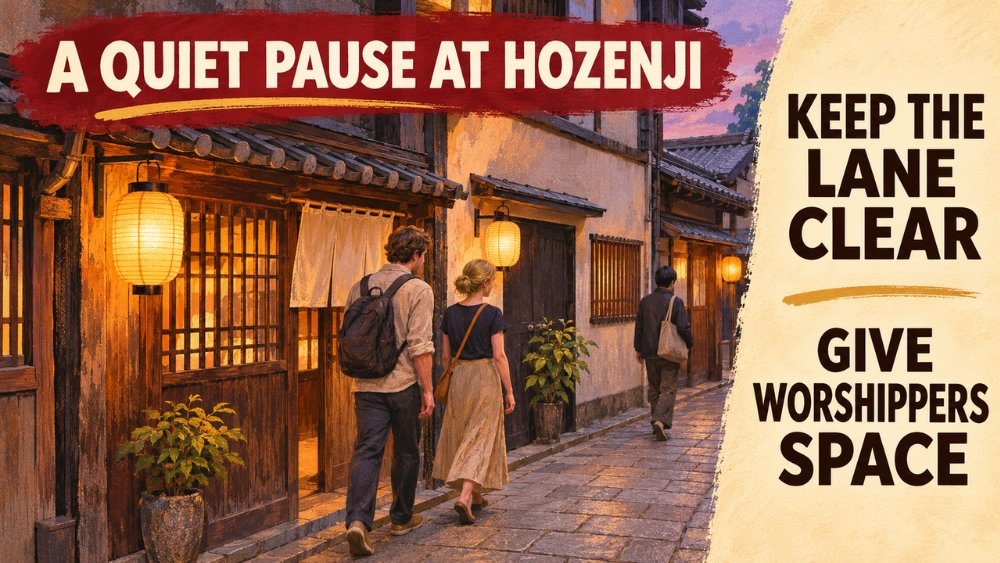
South of the canal, Hozenji Temple is an active Buddhist place of worship. Hozenji Yokocho is the pair of narrow stone-paved restaurant lanes just north of the temple. Visit the temple and walk through the lanes, but don’t count on a quiet or empty path at dinner time. The lanes are less than three metres wide, so even a small group stopping can fill the space.
The temple’s moss-covered Mizukake Fudo is the figure that worshippers pour water over as part of a prayer. You do not have to participate. If you want to, follow the instructions on site and wait your turn; keep conversations low and give people praying room. The temple lists visits to the grounds at any hour and its office from 10 a.m. to 6 p.m. Those are temple hours, not restaurant hours. For an underground approach, the temple lists Namba Walk shopping passage exits B16 from Namba and B18 from Nippombashi. These are not the same as the Metro’s numbered exits.
Separate a snack from dinner
Choose one thing to eat on the walk: perhaps takoyaki (batter balls with octopus) or kushikatsu (fried skewers). Eat at the counter’s designated space if there is one, and ask where to leave the packaging. A small bag for wrappers is useful if there is no bin. Save the okonomiyaki, a savory griddled pancake, ramen or a grilled seafood meal for a seat where your group can take its time.
If you are hungry at the busiest point of the evening, the longest line is a poor way to pick dinner. For a specific small restaurant in Hozenji Yokocho, check meal hours, last order and whether it can seat your group together. An earlier table or an alternative in Sennichimae can make more sense than waiting on the main strip. Keep some yen for smaller counters: an IC card such as ICOCA or Suica is a tap-to-pay transit card, but shops decide which cards they accept. Choose your own restaurant from its menu and prices instead of following someone soliciting on the street; Osaka City addresses street solicitation in Minami.
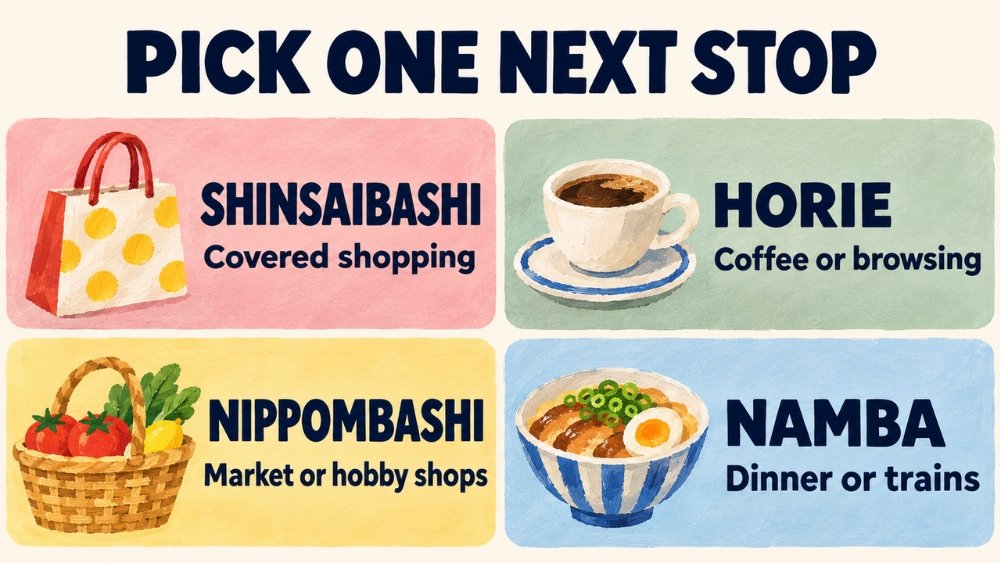
Let the next stop decide where you leave
- North for covered shopping: cross toward Shinsaibashi-suji (map). The roof helps in the rain; it does not make the arcade less busy. Close your umbrella before entering the covered walkway.
- West for coffee or smaller shops: use Orange Street in Horie as a pin rather than searching for the whole neighborhood. Pick an open café if a seat is the reason you are going.
- East toward Nippombashi: turn south of the canal for Kuromon Market (map) or continue into the Nippombashi shopping area for electronics and hobby shops. Kuromon can be busy at lunch, so it is a change of activity, not a guaranteed quieter stop.
- South for a meal or the train: head into Sennichimae (map) or toward the Namba station you need. The south-side lanes have more dining choices, not necessarily fewer people. Choose a Namba eating area based on whether you want a quick meal or a table for the evening.
If you are meeting friends, send the pin for your next stop rather than asking everyone to find you in the middle of Ebisu Bridge. That small decision gives you somewhere to go as soon as you have seen the view.