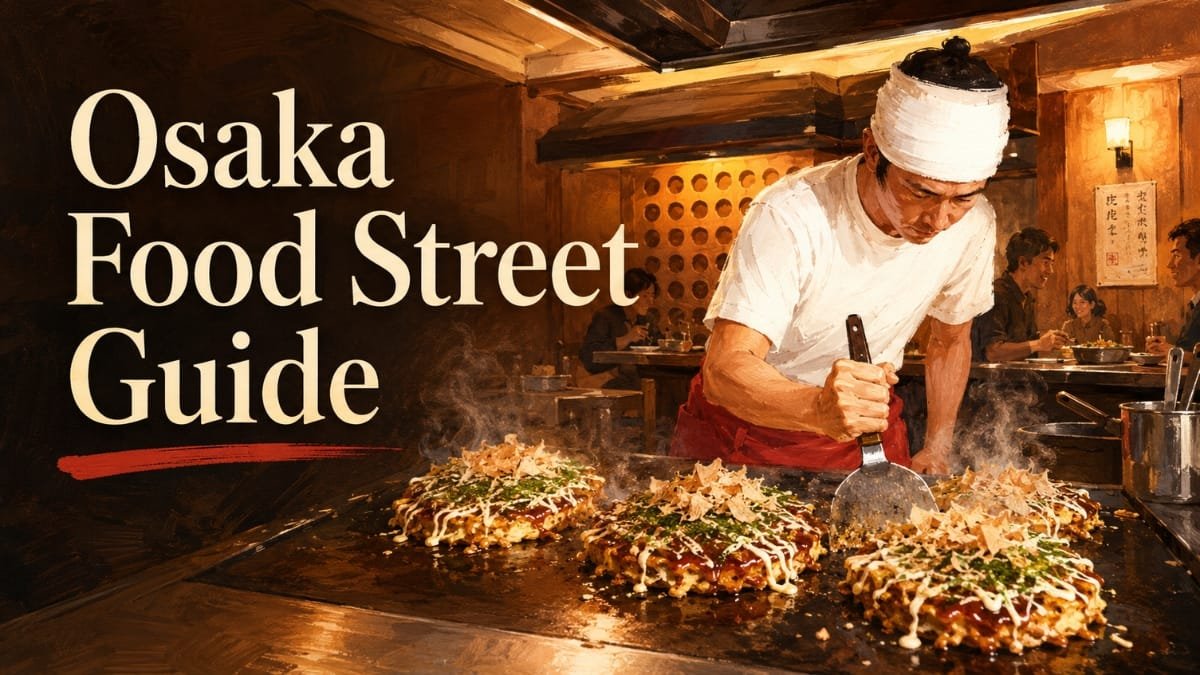
The best Osaka food street depends on the meal you want, the time of day, and how much crowd energy you have left. Choose Dotonbori for a first evening and the classic bright Osaka atmosphere; Kuromon Market for daytime sampling; Shinsekai for a casual kushikatsu-focused outing; Hozenji Yokocho and the Namba backstreets for a quieter sit-down meal; and Umeda when easy station access matters more than street spectacle.
For many first-time visitors, the most satisfying plan is not a marathon across all five. Pick one compact area, order small at the first stop, and keep one seated meal in reserve. You will taste more, wait less, and avoid crossing Osaka simply because one shop went viral.
Choose the food area that fits this part of your trip
| Area | Best use | Natural time | Food pattern | Main friction |
|---|---|---|---|---|
| Dotonbori | A first Osaka evening with lights, signs, snacks, and easy choices | Late afternoon to evening | Takoyaki and other quick bites, followed by a nearby restaurant | Dense crowds and prominent queues |
| Hozenji Yokocho and Namba backstreets | A calmer meal close to Dotonbori | Lunch or dinner | Okonomiyaki, izakaya dishes, noodles, and other seated meals | Small entrances can be easy to miss |
| Kuromon Market | Market browsing and several small tastes | Morning to early afternoon | Seafood, fruit, sweets, grilled items, and shop-specific specialties | Shop hours and prices vary; the arcade narrows when busy |
| Shinsekai | A retro, casual food outing with kushikatsu at the center | Lunch or an early evening | Fried skewers, casual restaurants, and old-school snack stops | Less convenient if it is far from the rest of your day |
| Umeda and Osaka Station | An easy meal on an arrival, departure, shopping, or rainy day | Any meal period that matches the chosen venue | Station-connected dining floors, food halls, department stores, and nearby streets | The station complex is large; “Umeda” is not one doorway |
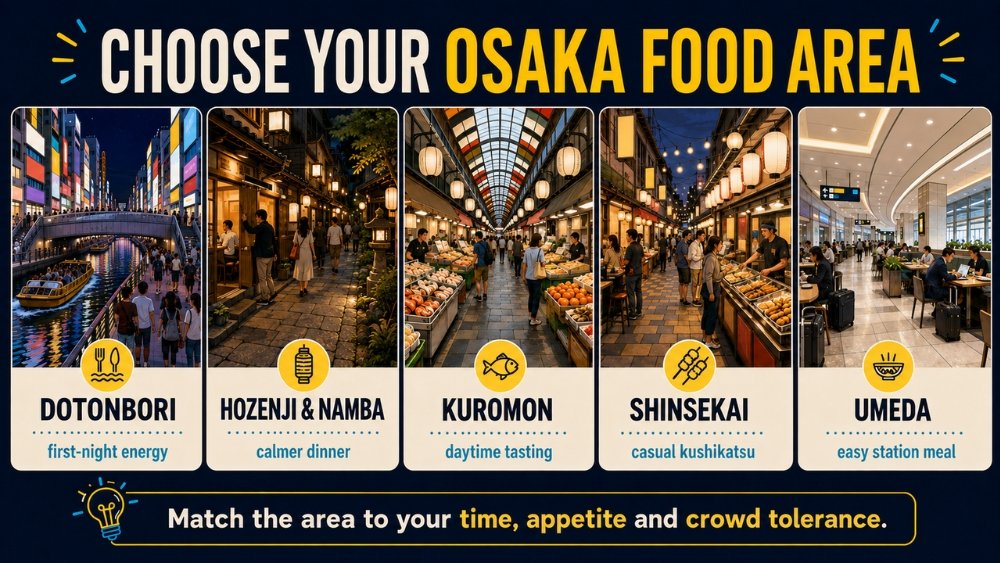
Treat these times as planning patterns, not universal opening hours. Individual markets, counters, restaurants, and mall floors keep their own schedules and last-order times.
Dotonbori works best as an opening scene, not a complete dinner plan
Dotonbori gives first-time visitors the version of Osaka they already recognize: the canal, Ebisu Bridge, large signs, open-front food counters, and a constant flow of people. It is the easiest area when a group wants atmosphere but has not agreed on one restaurant.
The useful strategy is to make Dotonbori your first lap. Walk the main stretch once, note two or three realistic options, then choose one small snack. Do not let the first long queue decide the entire evening. A line can reflect good food, online attention, a slow ordering process, or simply a visible location; it does not tell you which nearby meal will suit you best.
For orientation, save Dotonbori on Google Maps and Namba Station on Google Maps. The official Namba Ebisubashi-suji shopping street site helps explain how the covered shopping streets connect with the wider Minami area. Osaka Metro’s Namba Station page is the better source for current train, exit, and transfer information.
If the crowd stops being fun, change the setting rather than abandoning dinner. Hozenji Yokocho and the nearby Namba lanes are only a short walk from the busiest canal-side stretch but feel more enclosed and meal-focused. The stone-paved alley itself is narrow, so move quietly, avoid blocking entrances, and remember that the area includes a place of worship as well as restaurants. Save Hozenji Yokocho on Google Maps before leaving the bright main street.
The Osaka Map guide to exploring Dotonbori beyond the crowds adds a longer walking plan, while the Namba, Dotonbori, and Shinsaibashi area guide explains the neighborhood names.
Kuromon Market is a daytime tasting stop
Kuromon Market is strongest when the market itself fits naturally into a Namba or Nippombashi day. Its covered arcade gathers seafood sellers, produce shops, prepared-food counters, restaurants, and sweet shops, so it is easy to compare several foods without committing to one long meal.
Start with a full visual pass through the nearest section. Look at displayed prices and portion sizes before ordering. A grilled seafood item, fruit cup, or sweet can be a useful first taste, but premium ingredients and generous portions can fill both your budget and appetite quickly. Choose one item because you want it, not because you feel pressure to buy from every photogenic counter.
The market’s official store map is the right starting point for its current shop mix. Opening days and hours belong to the individual business, so verify a must-visit shop rather than relying on one market-wide timetable. Use Kuromon Market on Google Maps for the entrance that matches your route. Osaka Metro’s Nippombashi Station page gives current station information.
Kuromon’s official site presents tasting while moving through the market as part of the experience. In practice, the polite and comfortable choice depends on the shop and crowd. Use a vendor’s counter or eating space when one is provided, keep the central path clear, and ask where to return skewers, trays, and wrappers. Do not leave one shop’s rubbish with another business.
Shinsekai suits a focused, casual food outing
Shinsekai is the clearest choice when kushikatsu is the reason for the trip. Kushikatsu means ingredients such as meat, seafood, or vegetables placed on skewers, coated, and deep-fried. It works well for a group because people can choose different skewers and add more gradually.
The district has a retro, street-level character that differs from Dotonbori’s canal-side spectacle. It is a better outing when you want casual restaurants and distinctive neighborhood atmosphere than when you want the widest possible restaurant choice. Build it around one meal, then decide whether another nearby stop genuinely improves the day.
Sauce service has changed at many restaurants. Some use an individual container, pour-over bottle, or other shop-specific method rather than a shared tub. Follow the instructions at your table instead of memorizing one universal “no double-dipping” ritual.
Save Shinsekai on Google Maps and the exact restaurant pin. Ebisucho and Dobutsuen-mae can both be useful Osaka Metro stations depending on your starting point and destination; check the current Ebisucho Station page and Dobutsuen-mae Station page. The Osaka Map Shinsekai walking guide can help you connect the meal with the surrounding area.
Umeda is the low-friction answer after a train or shopping day
Umeda is not one famous food street. It is a network around JR Osaka Station and several Umeda stations, with restaurant floors, food halls, department stores, underground passages, and nearby dining streets. That makes it especially useful when you have luggage stored nearby, the weather is poor, or the group is too tired for another cross-city journey.
Choose the building before choosing the restaurant. “Near Osaka Station” can still mean a long indoor walk, and two dining floors that look adjacent on a map may sit in different complexes. Save the exact building entrance, floor, and last-order time. The Osaka Station City official site provides current facility information, and Osaka Metro’s Umeda Station page covers the subway station. Use Osaka Station on Google Maps for the wider hub.
The Osaka Map guide to eating near Osaka Station is useful when convenience matters more than a destination food crawl. If you are still choosing a hotel base, compare Namba and Umeda in the first-time Osaka area guide.
What to order—and why one portion is enough at first
Osaka’s famous foods do not all work in the same format.
Takoyaki are round batter snacks containing octopus. The center is often very soft and extremely hot. Open the first piece or wait before biting; a soft interior is not automatically undercooking. One shared tray can be enough if you plan to keep tasting.
Okonomiyaki is a savory griddled dish built from batter, cabbage, and chosen fillings. It is usually a better seated meal than a walking snack. Restaurants vary in whether staff cook it, diners cook it, or it arrives finished, so follow the table instructions.
Kushikatsu is filling faster than the small skewers suggest. Begin with a short set or a few individual skewers, then add more. Vegetable choices do not automatically make the meal vegetarian because batter, sauce, frying oil, or nearby preparation may involve animal ingredients.
Ramen, gyoza, yakiniku, grilled seafood, sweets, fruit, and small izakaya dishes can all belong in an Osaka food outing. An izakaya is a Japanese pub-style restaurant serving drinks and shareable food. It can be useful for a mixed group, but seating charges, minimum orders, smoking conditions, and payment methods vary by venue.
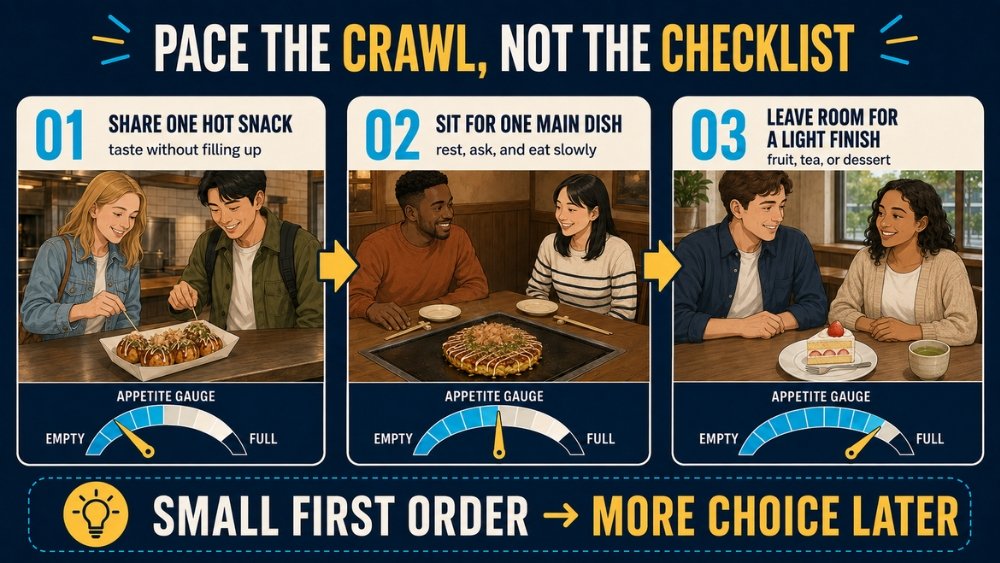
The practical rule is simple: make the first order smaller than your appetite. You can add food, but you cannot recover the next three stops after one oversized opening meal.
A low-backtracking Namba food plan
This flexible route keeps the main choices close together. It is not a promise that every shop will be open, and it should be shortened when the weather, crowd, or group energy changes.
- Start at Nippombashi for Kuromon Market if it is still a useful market time. Browse first and choose one small item.
- Walk toward Hozenji Yokocho for a quieter transition. Decide whether you want a proper seated meal here or after the canal.
- Continue to Dotonbori and Ebisu Bridge for the signs, canal atmosphere, and one classic snack.
- Finish toward Namba Station rather than walking back to your starting point. Confirm which Namba operator you need before following a generic station sign.
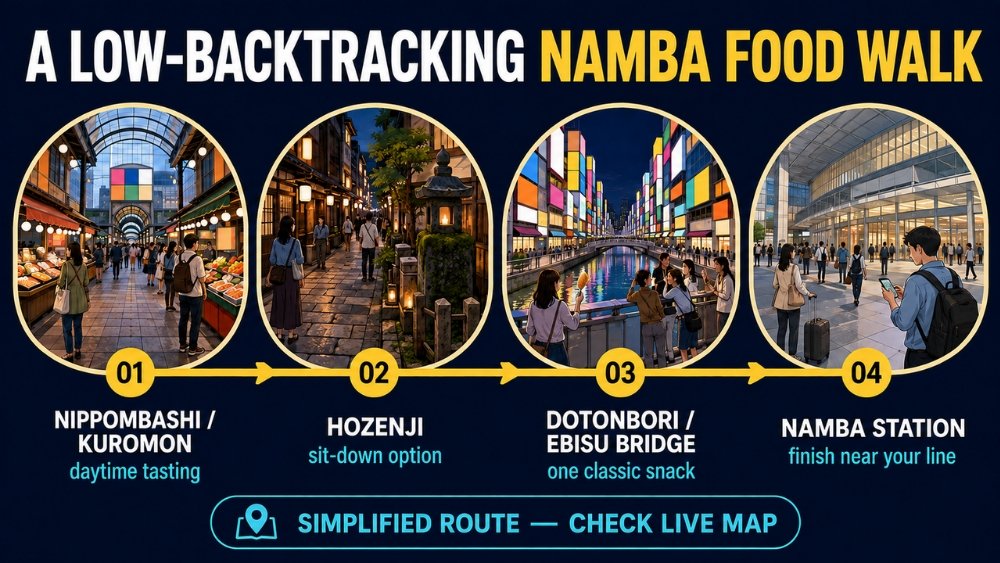
If you begin in the evening, reverse the priorities rather than forcing Kuromon into the plan: start at Dotonbori, move to Hozenji or a Namba backstreet for dinner, and finish near the station you will actually use.
The first 15 minutes decide whether the crawl feels easy
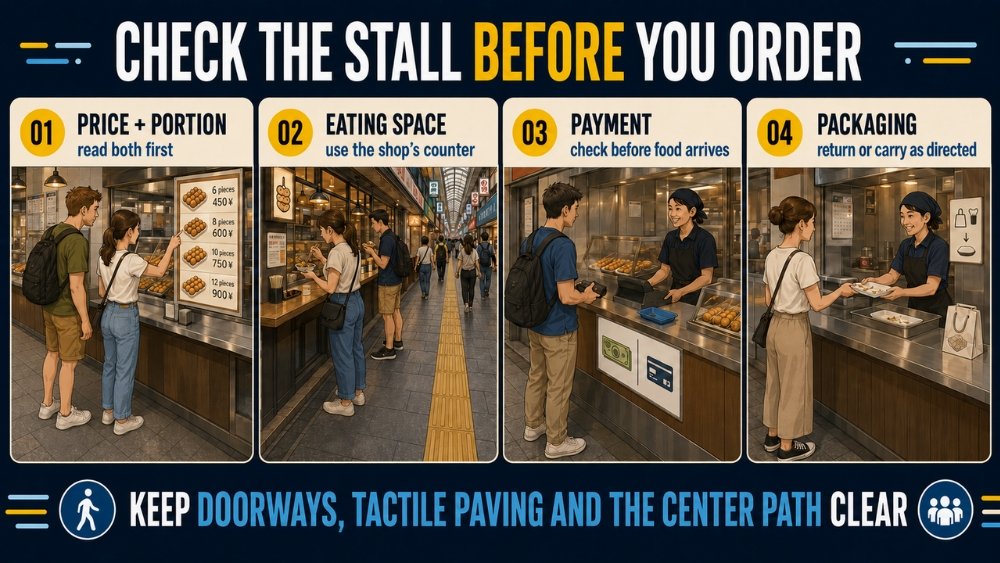
Before ordering, do four quick checks:
- Read the displayed price and portion. A tray for sharing and a one-person snack are not the same decision.
- Look for the eating space. A counter, ledge, table, or marked standing area tells you where the shop expects customers to stop.
- Check payment before the food is handed over. Carry some yen as a backup even when larger venues accept cards or contactless payment.
- Ask about rubbish. Return packaging to the selling shop when directed, or carry it until you find an appropriate bin.
Keep doorways, station exits, tactile paving, and the center of a narrow arcade clear. If you want a close photo of a cook, staff member, or another customer, ask first. Photographing a public streetscape is different from pointing a camera into someone’s working space.
Smoking is prohibited on streets, in parks, and in other public areas across Osaka City, with a ¥1,000 fine. Use a designated smoking place; the City of Osaka’s English guidance links to current smoking-area information.
Allergies and dietary preferences need a separate plan
Osaka street and casual foods often combine ingredients that are not obvious from appearance. Batter may contain wheat or egg; dashi stock may contain fish; sauces can contain soy or other allergens; frying oil and grills may be shared. A vegetable skewer, plain-looking noodle dish, or dessert is not automatically suitable for a vegetarian, vegan, halal, kosher, or allergy-sensitive diet.
For a serious allergy, prepare a clear Japanese allergy card that names the ingredient and asks about shared oil, utensils, and surfaces. Show it before ordering, not after the food arrives. If staff cannot confirm the ingredients or cross-contact risk, choose another venue. Picture menus and translation apps help with ordinary ordering, but they are not a safety guarantee.
For personal preferences rather than medical risk, explain the boundary that matters most—no meat, no seafood, no alcohol, or no animal-based stock—and stay flexible about the dish. A seated restaurant with time to ask questions is often a better choice than a crowded open counter.
Self-guided or guided?
A self-guided outing works when you are comfortable reading menus, changing plans, and leaving a long queue. It gives you control over budget and pace, and the compact Namba cluster makes improvisation easy.
A small-group food tour can be worth considering when the explanation matters as much as the food, your group has limited time, or you would rather have someone handle ordering and navigation. Read the exact inclusions, dietary-accommodation policy, walking distance, cancellation terms, and meeting point before booking; “Osaka food tour” does not guarantee the same areas or dishes.
If that support would improve your first evening, compare small-group Osaka food tours on Klook after you have chosen the neighborhood and confirmed that the tour can handle your dietary needs.
Make one good area choice, then leave room for appetite
Start with the part of Osaka already in your day. Use Kuromon when you are near Nippombashi before the market winds down, Dotonbori when a bright first evening is the point, Hozenji or Namba’s backstreets when you want a seat and a slower pace, Shinsekai when kushikatsu and retro streets justify the trip, and Umeda when the easiest good meal is the right meal.
Save the station and one fallback restaurant before you go. Once you arrive, take a short lap, order small, and let hunger, queues, weather, and energy make the final decision. That is not a compromise. It is how an Osaka food night stays enjoyable after the first bite.