If you want one classic Osaka cherry blossom outing, choose Osaka Castle Park for the landmark view or Kema Sakuranomiya Park for a long, flexible riverside walk. Choose Expo ’70 Commemorative Park when the park itself should fill half a day, and Katsuoji when your visit falls later in April and you are comfortable with a bus ride and paid temple entry.
The useful question is not which place ranks first. It is which place matches your dates, route, walking energy and tolerance for a tightly scheduled event. Most visitors need one main blossom spot and, at most, one nearby add-on. Trying to collect all 12 turns a spring day into train transfers.
Season status — October 5, 2026: Osaka’s 2026 blossom season has ended. Detailed 2027 bloom reports, night-viewing periods and Japan Mint entry rules had not yet been published when this guide was checked. Use the ranges below to choose a place, then reopen the linked official page when spring updates begin.
This guide uses “Osaka” in the prefecture-wide sense. The first five choices are inside Osaka City; the northern and southern choices require more travel but offer mountain, garden, lake and large-park settings that the city center cannot.
| Spot | Choose it for | Usual planning window | What changes the decision |
|---|---|---|---|
| Osaka Castle Park | The classic castle-and-sakura view | Main city bloom, usually late March to early April | Huge grounds and heavy peak-season demand; special gardens or events may have separate rules |
| Kema Sakuranomiya Park | A long riverside walk with many entry points | Main city bloom | Always-open public park, free, about 3 minutes from JR Sakuranomiya Station |
| Japan Mint Cherry Blossom Passage | An annual passage of varied, often later-flowering trees | Short period usually announced for early to mid-April | Wait for that year’s dates and entry rules; 2026 required advance registration |
| Nakanoshima Park | A convenient central add-on | Main city bloom | Easy from Yodoyabashi, Kitahama or Naniwabashi; not a destination-scale cherry display |
| Tsurumi Ryokuchi | A spacious local park with early and main-season options | Kawazu-zakura from late February; Somei Yoshino from late March | Metro station beside the park; the best trees are spread across a large site |
| Oizumi Ryokuchi | Family space, lawns and a broad variety sequence | Late February to mid-April, depending on variety | About 1 km from Shinkanaoka Station; choose a target area before entering |
| Expo ’70 Commemorative Park | A full park outing with the Tower of the Sun | Different varieties across March and April | Paid, timed opening hours and a large site; allow several hours |
| Katsuoji | Later mountain blossoms in a temple setting | Early to late April | Paid entry; check the current direct bus from Minoh-kayano and do not rely on an old timetable |
| Settsukyo Park | Sakura Square plus a wooded gorge or hike | Main Somei Yoshino window | Bus-and-walk access; trail terrain makes this a nature outing rather than a quick stop |
| Daisen Park Japanese Garden | A compact, quiet garden with several cherry varieties | Early types around mid-March; late types around mid-April | ¥200 adult entry, 9:00 a.m.–5:00 p.m., closed Mondays except holiday adjustments |
| Hamadera Park | A broad spring sequence in a pine-filled family park | Early through late spring, depending on variety | Station-side access is easy; parking can fill in spring |
| Sayamaike Park | An earlier lakeside walk and a north-bank blossom tunnel | Koshino-higan often leads in late March; later varieties follow | Suburban trip with limited parking at busy times; use the live city bloom report |
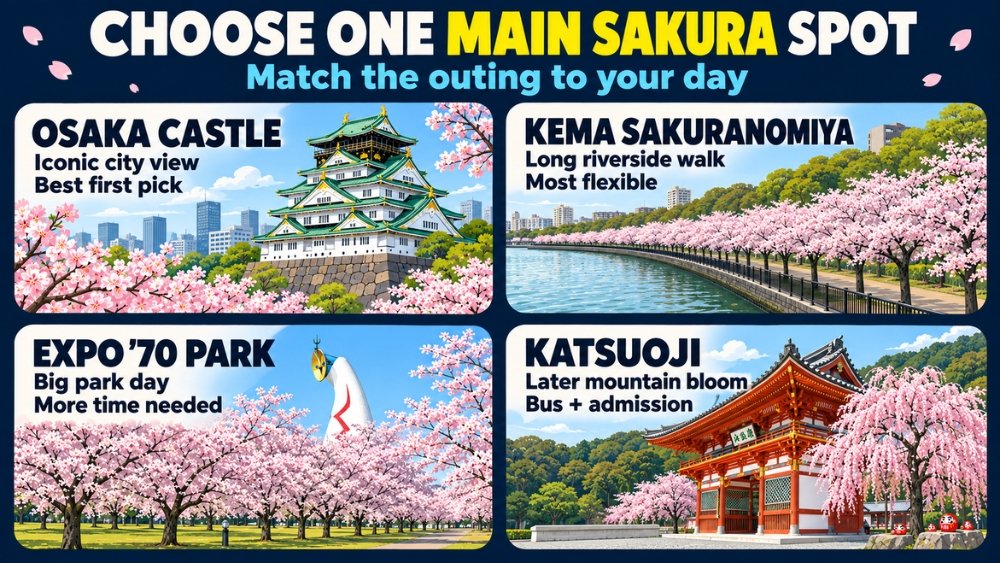
Four choices solve most first trips
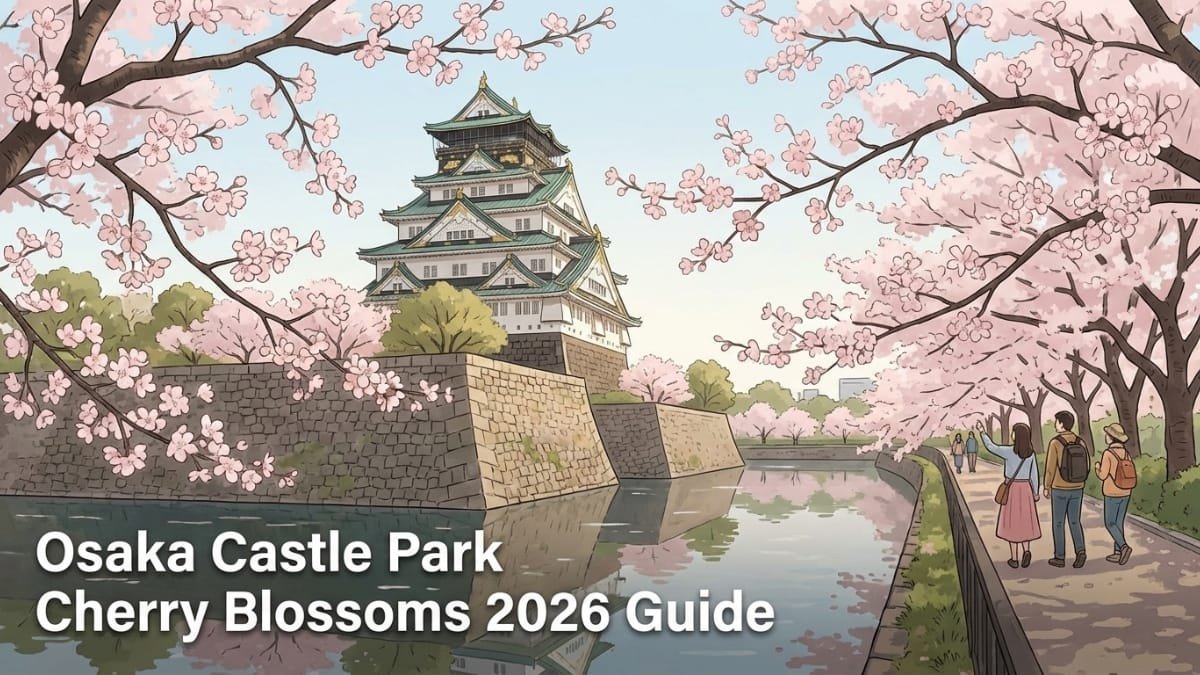
Choose Osaka Castle Park when the photograph matters. The park has roughly 3,000 cherry trees, mostly Somei Yoshino, across a very large historic landscape. You can see blossoms without buying a ticket, but the famous keep is not immediately beside every station exit and some areas, including Nishinomaru Garden, operate separately. Arrive with time to walk rather than treating the park as a ten-minute photo stop. The current blossom page also asks visitors to take rubbish home and prohibits vehicles and fire outside designated arrangements.
Choose Kema Sakuranomiya when the walk matters. Osaka City describes about 4,800 cherry trees along the Okawa River. The park is always open, has no dedicated parking and can be entered from Sakuranomiya, Osakajokitazume or Temmabashi. That makes it easier to shorten or extend the outing according to weather and energy. It is the strongest default for travelers who want blossoms to frame a spring walk rather than dominate a formal attraction visit.
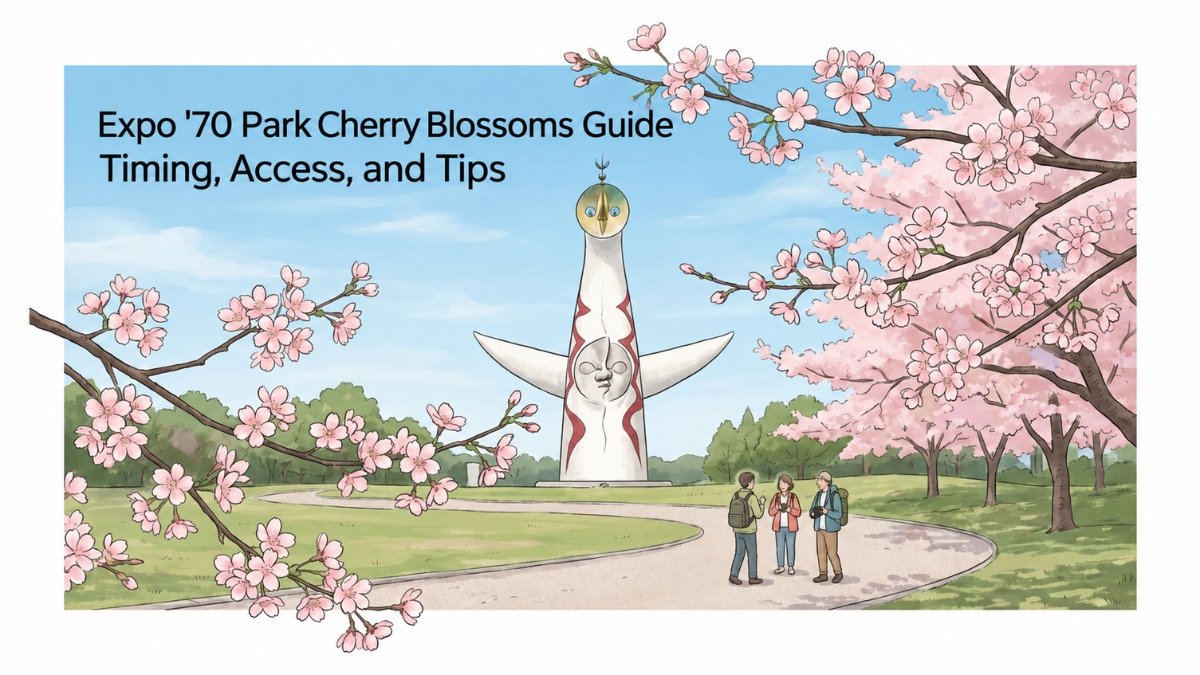
Choose Expo ’70 when you want a park day. The natural and cultural gardens are open 9:30 a.m.–5:00 p.m., with last entry 30 minutes before closing; the regular closure is Wednesday, with stated seasonal exceptions. Since April 2026, common entry to the Natural and Cultural Gardens and Japanese Garden has been ¥450 for high-school age and above, while junior-high age and younger enter free. Recheck both the opening calendar and current fees before travel. This is not the place to squeeze between lunch and a timed evening booking.
Choose Katsuoji when later bloom is more valuable than central convenience. The temple’s own spring guide places its usual cherry period from early to late April: higan cherries appear around the end of March, followed by weeping and double-flowered varieties. Current entry is ¥500 for adults and high-school students. The direct bus from Minoh-kayano makes a public-transport visit practical, but the timetable can change. If you drive, current weekend and specified-date parking is reservation-only. Our separate Katsuoji cherry blossom guide explains the visit in more detail and clearly separates the finished 2026 season from future updates.
Osaka blooms in a sequence, not one perfect week
“Late March to early April” is a useful shorthand for central Osaka’s Somei Yoshino, but it is not a guarantee and it does not describe every place in this guide. Warm weather can advance flowering; cold or rain can slow it or shorten the best viewing period. A forecast published weeks before the trip is a planning signal, not an appointment.
The broader strategy is to use different varieties and elevations. Tsurumi Ryokuchi’s official plant guide places Kawazu-zakura in late February to early March and Somei Yoshino in late March to early April. Oizumi Ryokuchi lists Kanhi-zakura from late February to mid-March, weeping cherries from mid-March, Somei Yoshino from late March and Sato-zakura into mid-April. Daisen’s Japanese Garden identifies an early group around mid-March and a late group around mid-April. Katsuoji’s mountain setting then provides a usual early-to-late-April range.
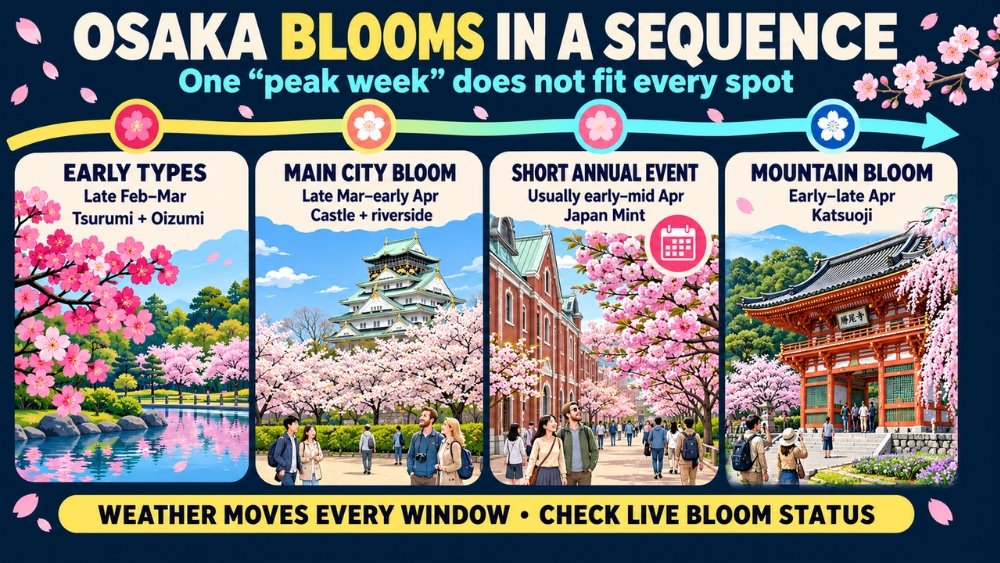
This sequence improves your odds, but it does not make a fixed itinerary weatherproof. Two or three days before the outing, check the facility’s live bloom update and the weather. If petals have begun to fall, choose a place you would still enjoy for its river, garden, temple or walking route. That keeps a less-than-perfect bloom day from feeling wasted.
Central Osaka: landmark, river or short add-on
Osaka Castle and Kema Sakuranomiya are the two strongest all-purpose choices, but they answer different needs. The castle gives one concentrated Osaka identity: stone walls, moat, keep and blossoms. Kema Sakuranomiya gives distance and movement: a long river, multiple bridges and the freedom to turn back whenever you want. Do not assume the better-known name is automatically the better day.
The Japan Mint Cherry Blossom Passage is a third type of outing. It is an annual event on Mint grounds, not an always-open hanami park. The 2026 passage ran for a short April period and required advance registration; those facts describe 2026, not a permanent 2027 rule. Wait for the new official notice before arranging the day around it. If the dates or entry method do not fit, use Kema Sakuranomiya on the opposite side of the same wider river area and keep the visit flexible.
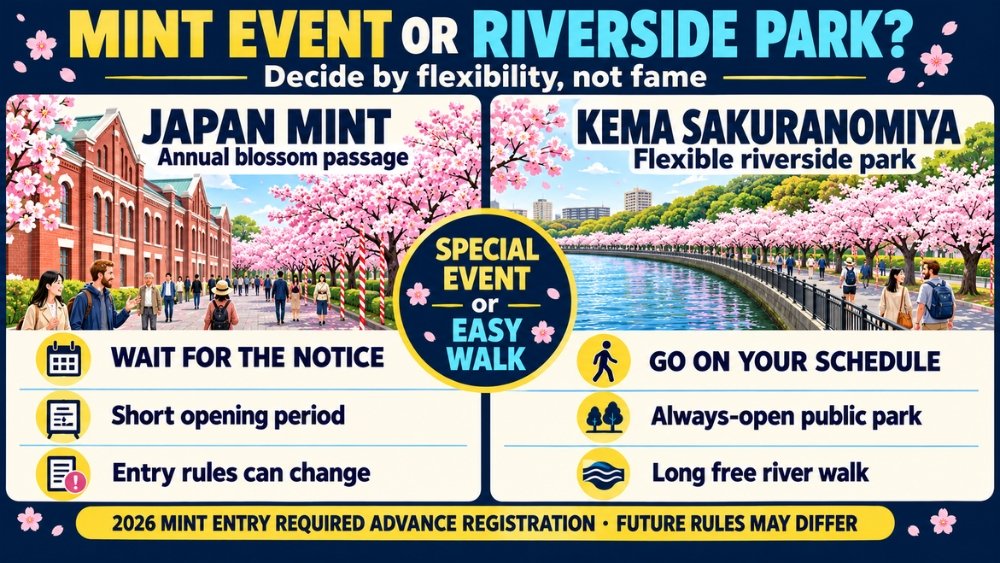
Nakanoshima Park is useful precisely because it is smaller in blossom terms. Osaka City lists cherry trees among its plantings, but the park’s signature display is its rose garden. Choose Nakanoshima when you are already between Umeda, Yodoyabashi or Kitahama and want a river-and-architecture walk with some spring color. Do not cross the city expecting the same density as Osaka Castle or Kema Sakuranomiya.
Tsurumi Ryokuchi is the city choice for more open space and a broader calendar. More than half of its roughly 1,400 cherry trees are Somei Yoshino, with larger groups west and northeast of Oike Pond and near the Ryokuchibashi entrance. Early Kawazu-zakura gives the park a different role before the central Somei Yoshino peak. Tsurumi-ryokuchi Station is immediately beside the park, but the grounds are extensive, so open the park flower map and choose one area rather than wandering toward every label.
North Osaka: make the extra travel the point
North Osaka works best when you choose a complete outing, not a distant blossom pin.
At Expo ’70 Commemorative Park, the Tower of the Sun, lawns, groves and gardens justify the journey together. The official 2026 bloom log showed different areas and varieties continuing through April, but those dated observations should not be copied as a future forecast. Use the current flower page to decide where to enter and which side of the park deserves your time.
At Katsuoji, the value is the combination of mountain greenery, temple architecture, worship and later-flowering cherries. Treat the site as a religious place first: keep voices low around worship, follow photography restrictions and do not place or move the small daruma figures for a picture. The bus and admission make this a deliberate half-day, not a backup stop after central Osaka.
Settsukyo Park is for visitors who want a wooded landscape. Takatsuki City lists about 230 trees in Sakura Square at the park’s southern side, plus riverside and ridge walking routes. The city bus reaches several approaches from JR Takatsuki Station, but your stop should match the walk you intend to do. Sakura Square and a gentle park visit are different from continuing into the gorge. Barbecue is prohibited in the city’s parks, including Settsukyo, so do not arrive expecting an improvised cookout.
South Osaka: family parks, a garden and an earlier lake
Oizumi Ryokuchi is a practical family choice when open ground matters more than a famous landmark. Sakura Square alone has about 600 Somei Yoshino trees, while Futagoyama, Narabigaoka and other areas spread blossoms across the park. The main transit drawback is the walk: the official access page places the park about 1 km east of Shinkanaoka Station. Save the correct entrance and target area before leaving the station. If using the free barbecue area, follow its current rules and avoid late noise near neighboring homes.
Daisen Park Japanese Garden is the opposite kind of experience: bounded, quiet and easy to understand. The garden’s official seasonal page lists weeping cherry, Tairyo-zakura and Sato-zakura in different parts of the grounds. It is open 9:00 a.m.–5:00 p.m., with last entry at 4:30 p.m.; adult admission is ¥200, and the regular Monday closure shifts when Monday is a holiday. The garden does not permit food brought in, so use it for a composed stroll rather than a picnic. JR Mozu Station is about a ten-minute walk away.
Hamadera Park earns its place through variety and easy rail access. An official spring guide shows a sequence including Kawazu, Oshima, Yoko, weeping, Somei Yoshino and double-flowered cherries, rather than one identical grove blooming at once. Nankai Hamaderakoen Station and Hankai Hamadera-ekimae Station are beside the park. Spring parking can fill, so the rail advantage is real rather than decorative.
Sayamaike Park is the best early-lakeside choice in this group. Osakasayama City describes about 1,300 trees around the reservoir, with early Koshino-higan and a particularly strong tunnel effect on the north bank. The 2026 record showed those early trees reaching full bloom around the end of March and moving into leaf in early April; that is a past observation, not a 2027 prediction. Later varieties can extend the season. The path is long enough to become a real walk, and busy blossom days put pressure on limited parking, so public transport and a chosen turnaround point make the visit easier.
Keep one blossom day in one part of Osaka
The biggest planning mistake is not choosing the “wrong” park. It is crossing the prefecture for a second view that adds little to the first.
In the city core, choose Osaka Castle for the landmark or Kema Sakuranomiya for the river; add Nakanoshima only when it already fits your central route. Treat the Mint as a separate annual-event decision. In east Osaka City, Tsurumi Ryokuchi can fill the park portion of the day by itself. In north Osaka, choose among Expo ’70, Katsuoji and Settsukyo according to whether you want a designed park, a temple or a nature walk. In south Osaka, choose the open lawns of Oizumi or Hamadera, the enclosed garden at Daisen, or the lake circuit at Sayamaike.

A short visit can be as simple as Nakanoshima during an existing central day. A half-day can belong entirely to Osaka Castle or Kema Sakuranomiya. A large park or suburban choice deserves a wider block with no rigid booking immediately afterward. If mobility, a stroller or long standing is a concern, check the current facility map for slopes, surfaces, toilets and step-free entrances before settling on the place.
Choose the memory, then check the bloom
Choose Osaka Castle for the postcard, Kema Sakuranomiya for the walk, Japan Mint for the short annual event, Tsurumi or Oizumi for local park space, Expo ’70 for a full park day, Katsuoji for later mountain color, Settsukyo for a nature outing, Daisen for a composed garden, Hamadera for rail-easy variety, or Sayamaike for an earlier lakeside route.
Then let the live bloom report make the final call. The best Osaka cherry blossom plan is not the one with the most pins. It is the one that still feels like a good day when the flowers are a little early, a little late or already beginning to fall.