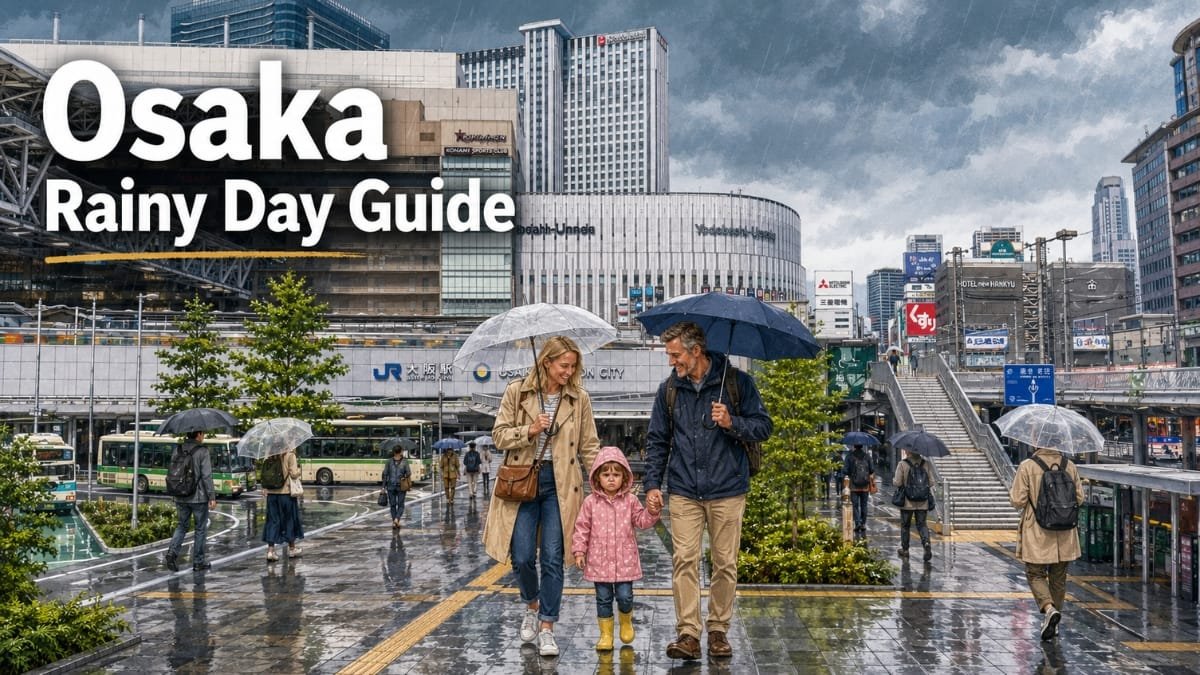
Rain is easier to handle in Osaka when you stop trying to cross the whole city. This one-day plan stays around Namba, using underground passages and covered shopping streets for most of the route. It works especially well if your hotel is in Namba, Dotonbori or Shinsaibashi.
The day is not completely indoors. Kuromon Market, the entrances between buildings and the Dotonbori canal all involve short exposed sections. In steady or wind-driven rain, skip those parts and spend longer in Namba Walk, one indoor attraction and Namba Parks. The useful choice is not “go out or stay in”; it is how much outdoor friction your group can comfortably absorb.
Start with the right Namba
“Namba Station” is a district of connected but separate railway facilities. Osaka Metro, Nankai, Kintetsu, Hanshin and JR all use Namba or Osaka-Namba in their station names. Follow the operator and line on your ticket or map, not the word “Namba” alone.
For this itinerary, Osaka Metro Namba and Osaka-Namba are convenient for the eastern half of Namba Walk. Nankai Namba is the natural anchor for Namba Parks. The Osaka Metro Namba station guide shows the exits, facilities and connections; the Kintetsu Osaka-Namba transfer map gives realistic transfer times between the railway gates.
An IC card is a rechargeable tap-to-pay transit card, such as ICOCA or Suica. It is useful if the weather forces a short train ride, but it does not make the Namba stations physically identical. Our ICOCA guide for Osaka explains where the card works and when another ticket is still needed.
Before leaving the hotel, put a compact umbrella and a small waterproof bag within easy reach. Store large luggage at the hotel or in a station locker. A rolling suitcase turns crowded arcades and wet thresholds into much harder work than this compact route needs.
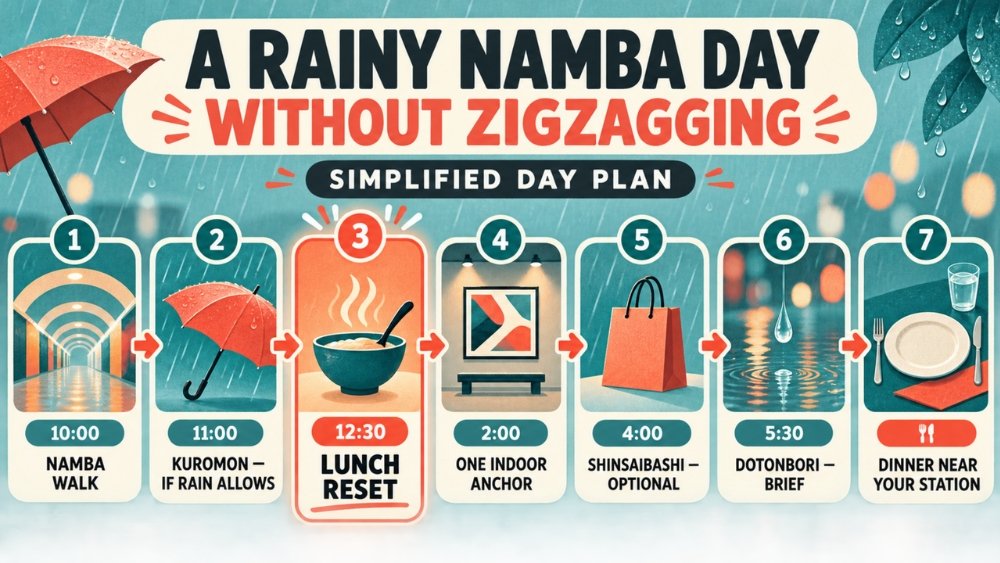
The route moves east for Kuromon, then back west and north. In heavy rain, remove the exposed stops instead of adding transfers.
10:00 a.m. — settle in at Namba Walk
Begin in Namba Walk, the underground shopping street running beneath central Namba. Its official site currently lists standard hours of 10:00–21:00 for fashion and 10:00–22:00 for dining, with some stores opening earlier or using shorter hours. That makes 10:00 a safer planning time than assuming a department-store breakfast will be available early.
Use the first half-hour to eat, buy anything the weather exposed—socks, a stronger umbrella, a bag for wet items—and judge the rain from an exit close to your next stop. Namba Walk is also a navigation spine, not one single station concourse. Save its official access page and Namba Walk in Google Maps rather than relying on an exit number remembered from another Namba line.
If you are traveling with children or anyone who needs regular seating, this is the moment to simplify the day. One museum or one shopping complex is enough for the afternoon; the covered route itself provides the rest of the activity.
11:00 a.m. — use Kuromon as a food stop, not shelter for the whole morning
Kuromon Ichiba Market is east of central Namba, closer to Nipponbashi. The main market lane has a roof, but the route to it and some side openings remain exposed. Wind can carry rain under the canopy, so this stop belongs in light or moderate rain, not in a downpour.
The market’s official directory shows that individual shops keep different hours and holidays. There is no dependable single opening time for every stall. At 11:00, browse first and choose food only after seeing what is actually open. The official information-center page also asks visitors not to stop in the middle of the lane; move to the side before studying a menu or taking a photo.
Treat Kuromon as an hour-long tasting and browsing stop rather than a promise of the cheapest lunch. If raw seafood is not appealing, look for cooked skewers, noodles, fruit, sweets or a sit-down meal. Travelers with allergies or strict dietary needs may find a restaurant with a fixed menu easier than making several stall-by-stall decisions.
Open Kuromon Market in Google Maps before leaving the underground passage. If the exposed approach already feels unpleasant, skip the market without trying to “save” the schedule.
12:30 p.m. — make lunch the reset point
Return toward Namba for a sit-down lunch. A restaurant floor inside a shopping building is usually easier than a celebrated street-level shop with a queue outside. It also gives a mixed group more choice, reliable toilets and a place to reorganize wet bags.
For area-by-area meal ideas, use our guide to eating in Namba. Choose cooked seafood, udon, curry, okonomiyaki or another familiar option if raw fish is not comfortable for you. The route should adapt to the group, not turn lunch into a cultural test.
This is the day’s decision point. If shoes and sleeves are merely damp, continue to one compact indoor attraction. If coats are soaked or the forecast is worsening, remove Kuromon, Shinsaibashi and the canal from the rest of the plan and build the afternoon around connected interiors.
2:00 p.m. — choose one indoor anchor
The smallest cultural option is the Kamigata Ukiyoe Museum near Dotonbori. Ukiyo-e are Japanese woodblock prints; this museum focuses on works connected with Osaka’s kabuki theatre culture. The official English page currently lists Tuesday–Sunday opening from 11:00 to 18:00, with last admission at 17:30, and closure on Monday or the following day when Monday is a national holiday. Because schedules and exhibitions can change, open the official page on the morning of your visit. Save the museum in Google Maps for the final approach.
The museum is a focused stop rather than a large all-afternoon institution. That suits adults who want art and quiet, but it may be a poor fit for young children who need room to move.
The more flexible alternative is Namba Parks, a commercial complex directly connected to Nankai Namba Station. Shops, restaurants and cinemas allow the visit to expand or contract without another cross-city transfer. The rooftop garden is part of the attraction in clear weather, but it should not be the reason to go during heavy rain. Use the indoor floors, then save the garden for better conditions. Open Namba Parks in Google Maps to see which side of the wider Namba station area you are approaching.
Do not attempt both merely to fill time. Choose the museum for one defined cultural hour; choose Namba Parks when your group needs freedom to eat, sit, shop or watch a film at different speeds.
4:00 p.m. — let the rain decide whether you go north
If the rain has eased, walk north from Dotonbori into Shinsaibashi-suji Shopping Street. The long arcade is covered, but it is not a sealed indoor mall: entrances, crossings and side streets still collect water. Keep the umbrella closed under the roof, watch for slick patches near openings and move with the pedestrian flow rather than stopping in the center.
The street is useful for practical shopping as well as browsing. Drugstores and general retailers can replace wet socks, toiletries or an umbrella. For medication, use products with instructions you understand and ask a pharmacist when the choice is unclear.
Save Shinsaibashi-suji in Google Maps. If the northward walk would force your group through wind-driven rain, stay around Namba instead. Covered does not mean weatherproof from door to door.
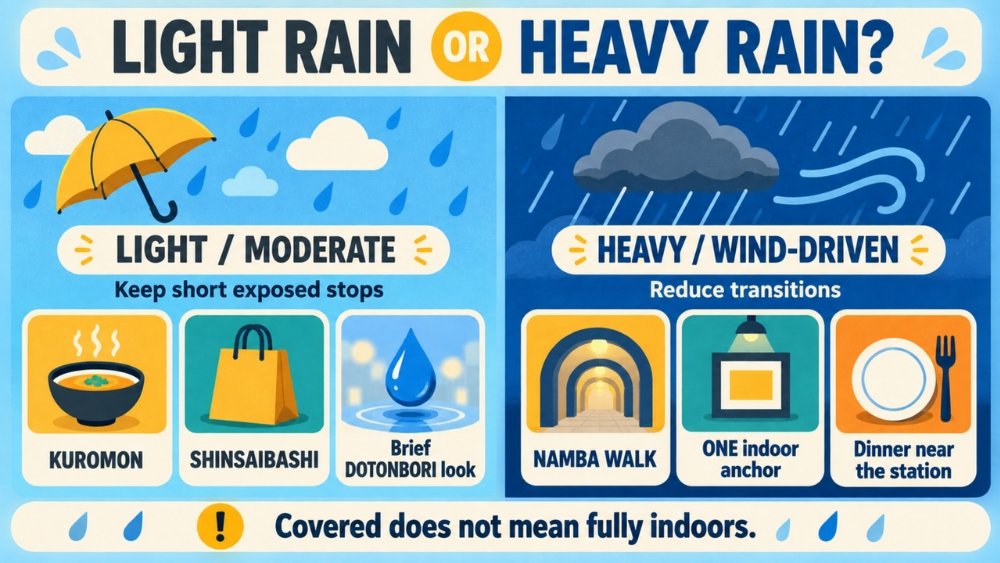
Light rain keeps Kuromon, Shinsaibashi and a short Dotonbori look in play. Heavy rain favors connected interiors and fewer transitions.
5:30 p.m. — Dotonbori is optional, not a test
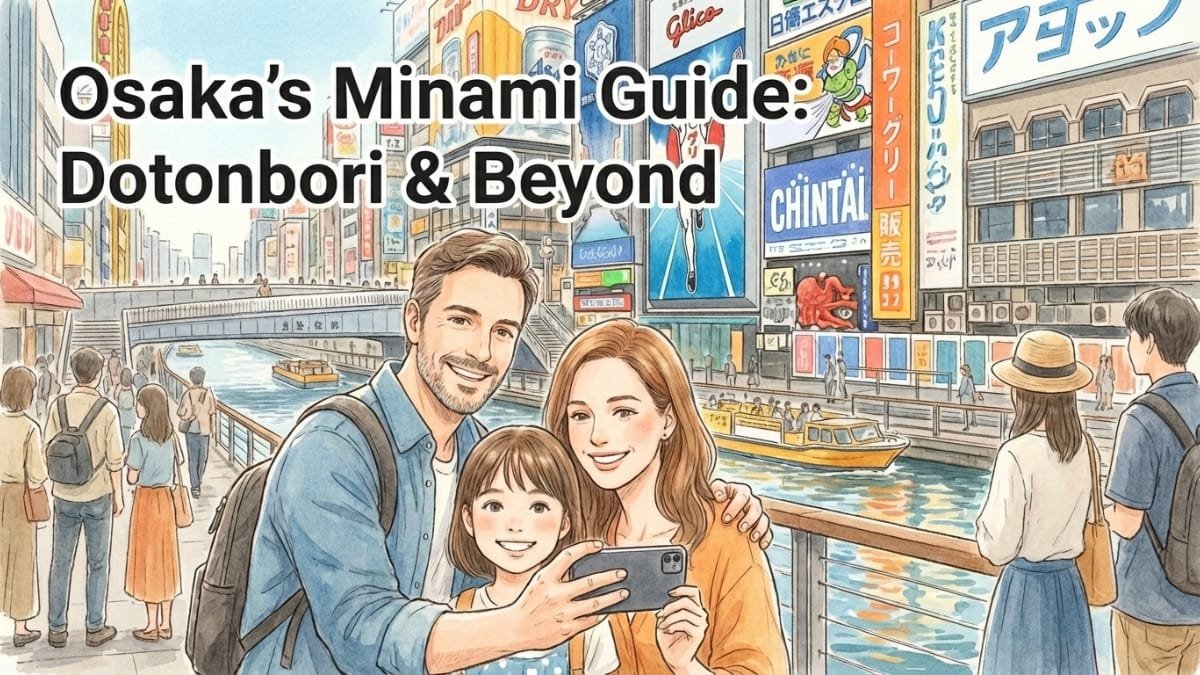
In light rain, a short look at the canal and illuminated signs can be worthwhile. Keep the stop brief, protect your phone and take photos from a position that does not block the bridge or narrow pavement. Our Dotonbori guide beyond the crowds helps you choose a less compressed route. Use Dotonbori in Google Maps for the public canal area.
There is no single operator page governing the whole public streetscape, so this article does not present an “official Dotonbori” timetable. If rain is driving sideways, visibility is poor or the pavement feels unsafe, leave the canal for another evening. Missing one photograph is cheaper than spending dinner in soaked clothes.
6:30 p.m. — finish near the station that takes you home
End in Namba if you are staying nearby. If your hotel is around Umeda, ride the Osaka Metro Midosuji Line from Namba to Umeda and eat within the connected Osaka Station–Umeda complex. Do not cross the city for a single restaurant unless it has a reservation worth protecting.
A 6:00 dinner can be easier than joining the main queue later, but individual restaurant hours and last orders vary. Make the final choice from the live restaurant page or the building directory, not from an old screenshot or a generic opening-hours listing.
The heavy-rain version
When the rain is persistent, windy or exhausting for your group, compress the route to three blocks:
- Eat and regroup in Namba Walk.
- Choose the Kamigata Ukiyoe Museum or Namba Parks—not both unless movement remains easy.
- Have dinner close to the station used by your hotel route.
Skip Kuromon, the Shinsaibashi walk and the Dotonbori canal. A short taxi can be reasonable for a family, a traveler with limited mobility or anyone carrying luggage, but traffic and curbside pickup in central Namba can still be awkward in bad weather. Ask the hotel or facility staff for a suitable pickup point rather than standing in an exposed road entrance.
Save outdoor landmarks, long neighborhood walks and parks for a clearer day. A successful rainy itinerary is not the one that preserves every stop. It is the one that keeps everyone warm enough, dry enough and unhurried enough to enjoy dinner.