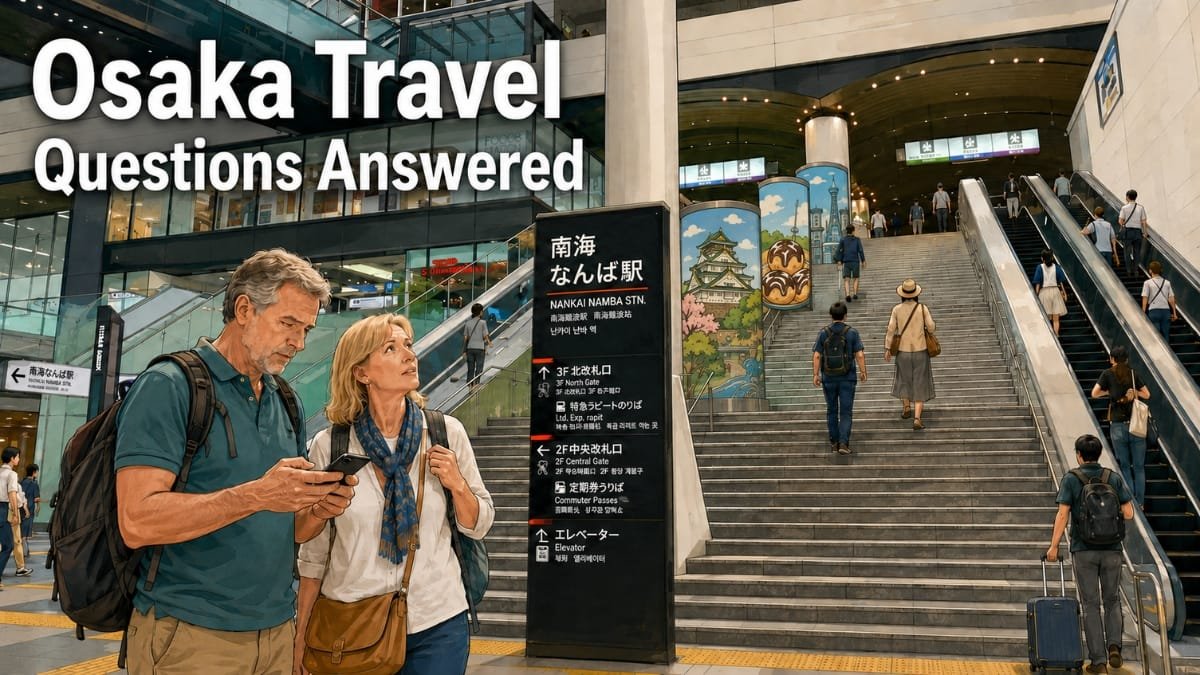
Osaka becomes easier when you stop treating it as one compact sightseeing zone. Umeda, Namba, Shin-Osaka, Osaka Castle, and the bay area serve different purposes, and the best choice changes with your hotel, arrival route, and plans after dark.
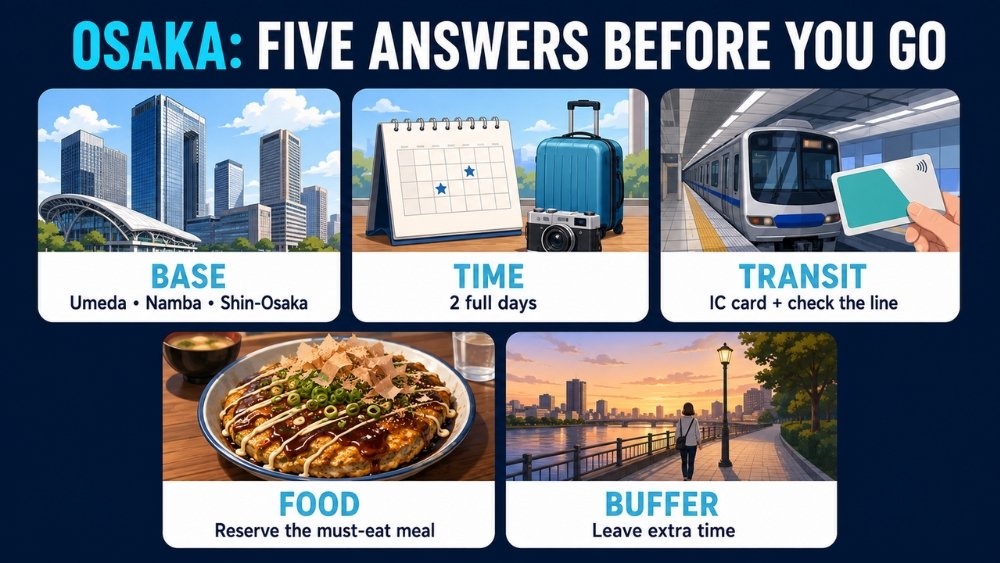
The short version is this: stay in Umeda for regional day trips, Namba for food and evening walks, or Shin-Osaka for a very short Shinkansen-based stay. Give the city at least two full days if you want more than a rushed highlights loop. Use one IC card across most local transport, but still check the operator, station name, platform, and exit before every important journey.
| Question | Practical answer | What changes the answer |
|---|---|---|
| Where should I stay? | Umeda for day trips; Namba for evenings; Shin-Osaka for a short rail-focused stay | Airport route, luggage, noise tolerance, and your first and final journeys |
| How many days do I need? | Two full days for a useful first visit | Add a day for USJ, the aquarium, or slower neighborhoods |
| Is Osaka easy without Japanese? | Usually yes with a route app and English signage | Large interchanges and similar station names cause more trouble than language |
| Do I need cash? | Carry some cash even if you use cards and an IC card | Small restaurants, older machines, and individual shops vary |
| Should I reserve restaurants? | Reserve a must-eat dinner; keep casual meals flexible | Small counters and Friday or Saturday evenings fill faster |
Where should you stay in Osaka?
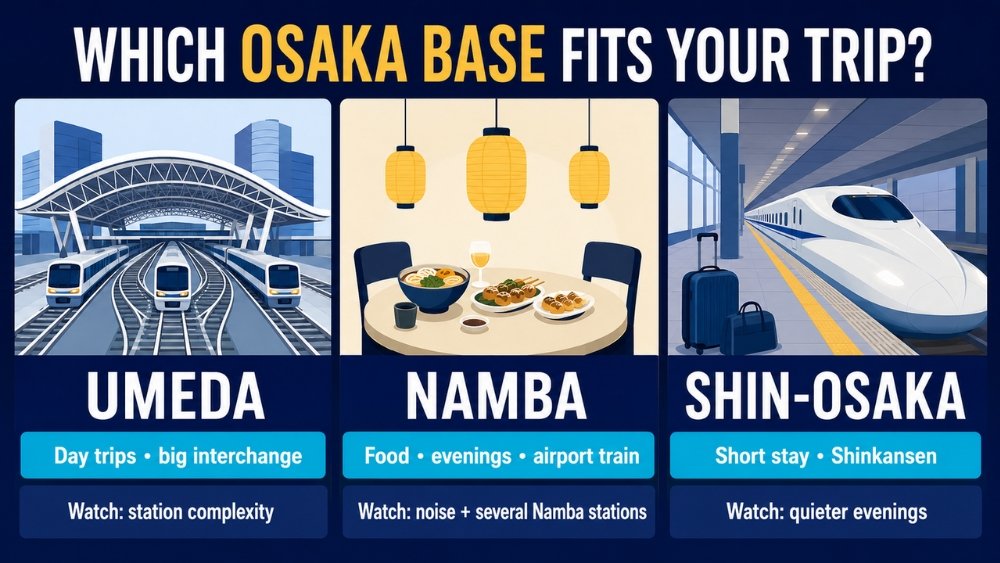
Choose the station district that removes the most difficult journey from your actual trip. A hotel near a famous area is not automatically convenient if you must cross a large interchange with luggage every morning.
Umeda and Osaka Station
Umeda is the commercial district around JR Osaka Station and several separate railway and subway stations. It works well for travelers planning trips toward Kyoto, Kobe, and other parts of Kansai. Department stores, restaurants, underground walkways, and multiple rail companies make the district useful in bad weather, but the same density can make the first arrival confusing.
Before booking, place the hotel entrance and the station gate you expect to use on the same map. “Near Umeda” can mean a different walk from “near JR Osaka Station.” See the JR Osaka Station information, read our Osaka Station navigation guide, and open Osaka Station in Google Maps.
If Umeda fits your itinerary, compare current Umeda hotel prices and availability on Klook. Klook lets you change the displayed language and currency, which can make comparison easier in a familiar format. Check the exact address, room category, cancellation terms, taxes, and final total before paying.
Namba
Namba suits travelers who want Dotonbori, Shinsaibashi, Amerikamura, Kuromon Market, and late dinners close to the hotel. Nankai services also make it a logical base for Kansai International Airport. The catch is that “Namba Station” refers to several nearby facilities operated by different companies. A short distance on a hotel listing can still become a long underground walk.
Use Nankai Namba Station’s official information, our guide to choosing a hotel near Namba Station, and Nankai Namba Station in Google Maps. Light sleepers should usually avoid a room directly over the busiest Dotonbori streets.
If Namba fits your itinerary, compare current Namba hotel prices and availability on Klook. Recheck which Namba station is closest to the property and compare the full stay total rather than the first nightly price shown.
Shin-Osaka
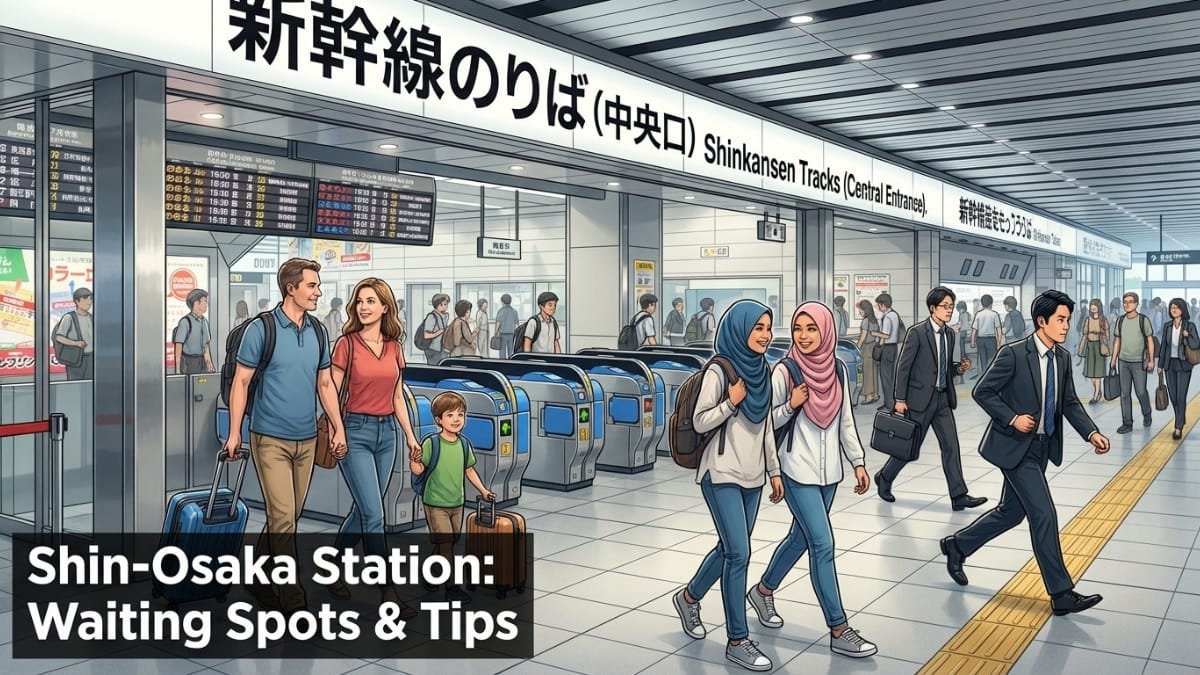
Shin-Osaka is useful when you arrive late by Shinkansen, leave early, or spend only one night between long-distance rail journeys. It is a transport base rather than Osaka’s most enjoyable evening district. For a longer city stay, Umeda or Namba usually gives you more to do after dinner.
Check the official Shin-Osaka station layout before a timed train, and open Shin-Osaka Station in Google Maps. Confirm whether the hotel is closest to the Shinkansen gates, JR local lines, or Osaka Metro; these are connected, but the walk matters with luggage.
If the short-transfer benefit outweighs the quieter evenings, compare current Shin-Osaka hotel prices and availability on Klook.
How many days do you need in Osaka?
Two full days are enough for a first look without turning every hour into a race. One sensible pattern is Osaka Castle and Umeda on one day, then Namba, Dotonbori, Shinsaibashi, and dinner in Minami on the next. Keep each day geographically compact.
Add a third day if you want Universal Studios Japan (Google Maps), Osaka Aquarium Kaiyukan (Google Maps), or a slower trip to Sumiyoshi Taisha (Google Maps). USJ can consume most of a day, and the aquarium is in the bay area rather than beside Namba or Umeda.
Do not schedule every hour. Heat, rain, a restaurant queue, or one wrong station exit can easily absorb the spare time in a tight plan. A useful itinerary has one main area before lunch, one after lunch, and an evening that does not depend on a perfect transfer.
Is Osaka easy to get around without speaking Japanese?
Usually, yes. Major stations use English signs, trains commonly include English announcements, and a route app can show the line, platform, and transfer. The harder problem is Osaka’s network: JR, Osaka Metro, Nankai, Kintetsu, Hankyu, and Hanshin are different operators, and connected stations do not always share one name.
An IC card is a rechargeable tap-to-pay transit card. ICOCA is the Kansai card most visitors see, and JR-West explains that it can be tapped at ticket gates and used at participating shops. It is convenient for most local trains and subways, but it does not make every reserved or limited-express service free. A separate limited-express or Shinkansen ticket may still be required.
Osaka Metro also accepts eligible contactless bank cards and devices at dedicated readers. That can be convenient for some visitors, but an ICOCA remains useful when moving across several operators. Whichever method you choose, use the same card or device at entry and exit.
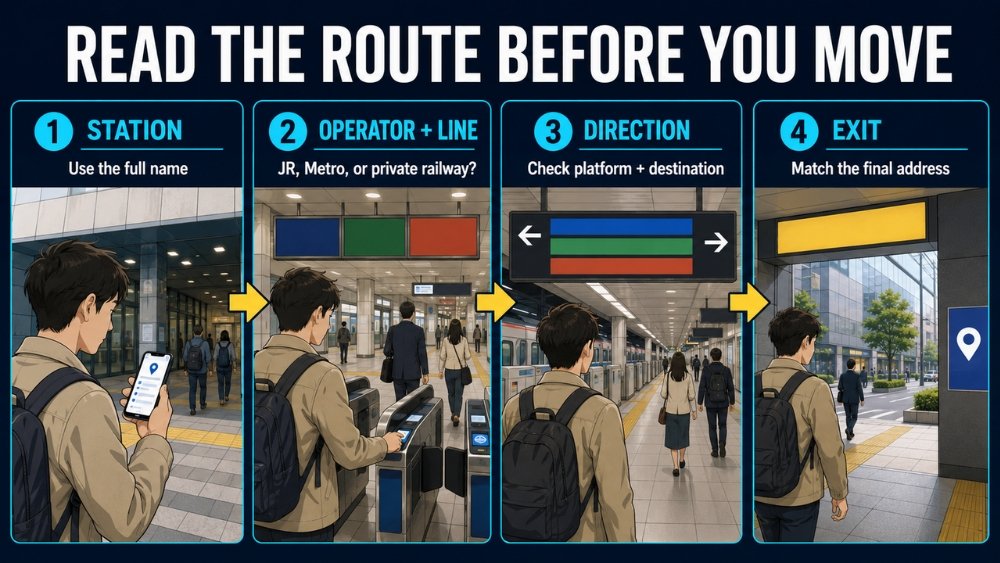
Before leaving the platform or ticket gate, check four details:
- the full station name;
- the operator and line;
- the direction or destination shown on the platform;
- the exit nearest your final address.
Around Umeda and Namba, take a screenshot of the destination name and exit number before going underground. Mobile positioning can drift inside a large station.
Should you use taxis in Osaka?
Use a taxi when it removes a difficult luggage transfer, when someone in your group has limited mobility, or after local trains have stopped. It is rarely the best-value choice for routine sightseeing across the city, and central traffic can slow the journey around Namba on busy evenings.
Show the destination address in Japanese or place the map pin on your phone. Taxi doors are normally controlled by the driver, so wait for the door to open and close instead of pulling it yourself. If the hotel has several entrances, pin the correct one rather than only the property name.
What is the best way to arrive from Kansai Airport?
Let the hotel decide. For Namba, Nankai’s current airport guide shows direct Rapi:t limited-express and Airport Express services. Rapi:t requires the ordinary fare plus a limited-express ticket; the Airport Express uses the ordinary fare only. Recheck the timetable for your arrival date.
For Umeda, compare the railway route with an airport limousine bus. The airport-bus operator’s official route list shows current Osaka Station-area services and stops. A bus can be easier with large luggage when it stops near your hotel, while rail may be better when road traffic is a concern.
For Shin-Osaka, look at the complete route to your hotel rather than assuming the Shinkansen station has one direct airport train that suits every arrival. The cheapest route is not automatically the easiest after a long flight.
Do you need reservations for Osaka restaurants?
Reserve when one particular restaurant is an important part of the trip. Small sushi counters, kaiseki restaurants, popular yakiniku restaurants, themed cafes, and limited-seat bars can fill before the day. Casual ramen, conveyor-belt sushi, food halls, and neighborhood diners are often easier as walk-ins, although individual policies vary.
For a flexible Friday or Saturday evening, eat earlier than the busiest dinner period or keep a second choice within walking distance. A long queue is not proof that the restaurant is right for your group. Families, travelers with allergies, and anyone arriving after a long day may be happier with a place that has clear menus, seating, and a shorter wait.
Check the restaurant’s own reservation page or social account close to the visit. Do not rely on an old blog post for opening days, last orders, or whether walk-ins are still accepted.
What should you know about food etiquette?
You do not need to memorize a rulebook. Wait to be seated when staff are managing tables, follow the ordering method at the entrance, and return trays or dishes only when the shop asks you to. Tipping is not expected.
At some izakaya, a small appetizer called otoshi may arrive with a seating charge. It is part of that restaurant’s system, not a request for a tip. If a charge or ingredient matters to you, ask before ordering rather than waiting for the bill.
Avoid blocking a crowded pavement while eating. If a market stall has a designated eating space, use it. Travelers with dietary restrictions should carry a short Japanese explanation of the ingredient they must avoid; “vegetarian” or “no meat” may not cover fish stock.
When is Osaka most crowded?
Crowds rise during major Japanese holiday periods, spring blossom season, summer school holidays, and popular autumn weekends. The time of day often matters just as much. Dotonbori is easier earlier, central stations are busiest around commuting periods, and major attractions can feel very different soon after opening.
Check the official operating calendar for a timed attraction shortly before visiting. USJ states that operating hours can change, while Kaiyukan publishes a date-specific hours calendar. For Osaka Castle, distinguish the free surrounding park from the museum inside the main keep, which has its own admission and operating schedule. See the Osaka Castle official site and Google Maps.
In summer, plan indoor breaks and carry water. In winter, waterfronts and open platforms can feel colder than central shopping streets. An early start is usually more reliable than trying to find an empty famous place in mid-afternoon.
What common mistakes should first-time visitors avoid?
The first mistake is trusting the minute count in a route app without allowing for the walk inside the station. Escalators, corridors, crowds, lockers, and the wrong exit all add time. Leave a buffer before a reserved train, restaurant, or attraction.
The second is choosing a hotel by neighborhood name alone. Test the first arrival, the most important morning trip, and the final departure. Those three routes reveal more than a generic “central Osaka” label.
The third is planning Osaka only around Dotonbori. See it if it interests you, but leave room for a different side of the city: Umeda’s vertical station district, the open space around Osaka Castle, the bay area, or the quieter approach to Sumiyoshi Taisha.
The last mistake is treating published schedules as permanent. Shops, restaurants, trains, and attractions can change hours, last entry, reservation rules, or closures. Recheck the responsible operator or venue close to the visit.
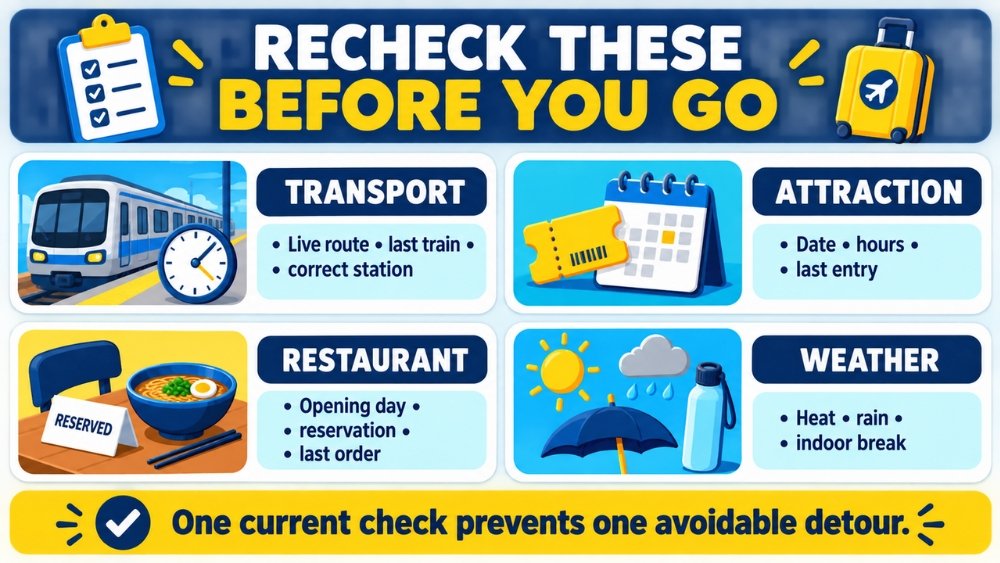
Osaka works best when each day has one main area, one clear transport plan, and enough room for an unscheduled meal or rest. If you know your base, your first route, and the one booking you do not want to miss, the city becomes much easier to enjoy.