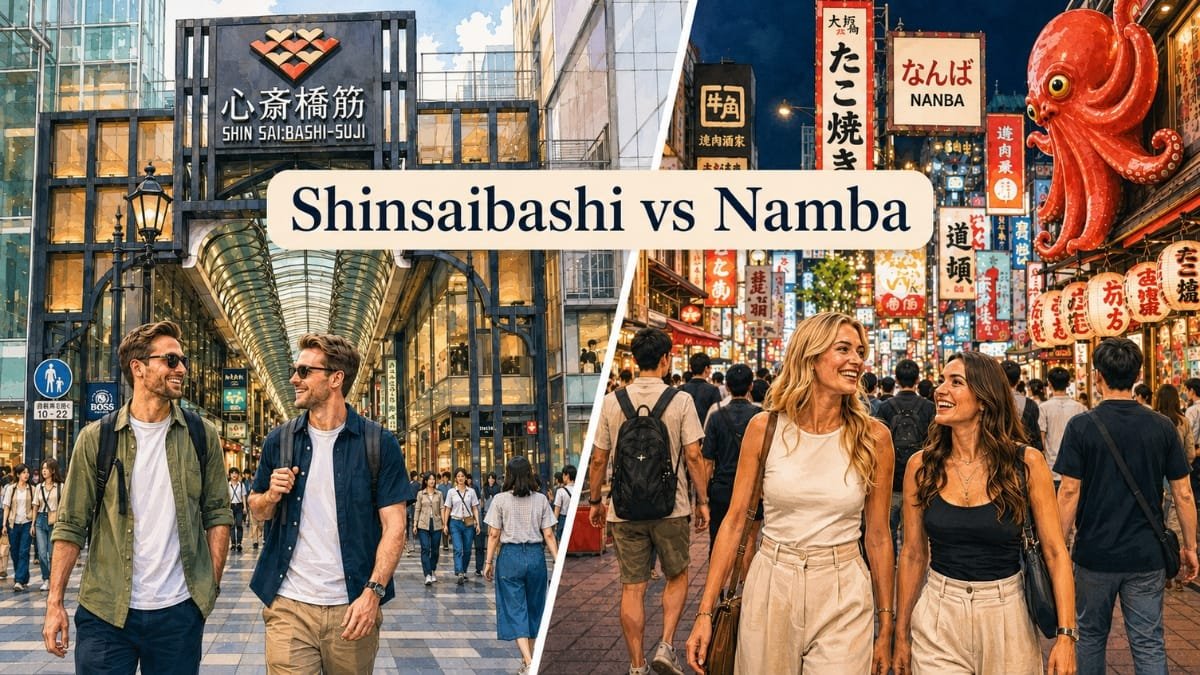
Shinsaibashi and Namba are not distant parts of Osaka. They sit next to each other in the Minami district, and the central streets are close enough to walk between. The practical choice is what you want outside your hotel door: a more polished shopping base with straightforward subway access, or a livelier food-and-entertainment center with stronger airport and Nara connections.
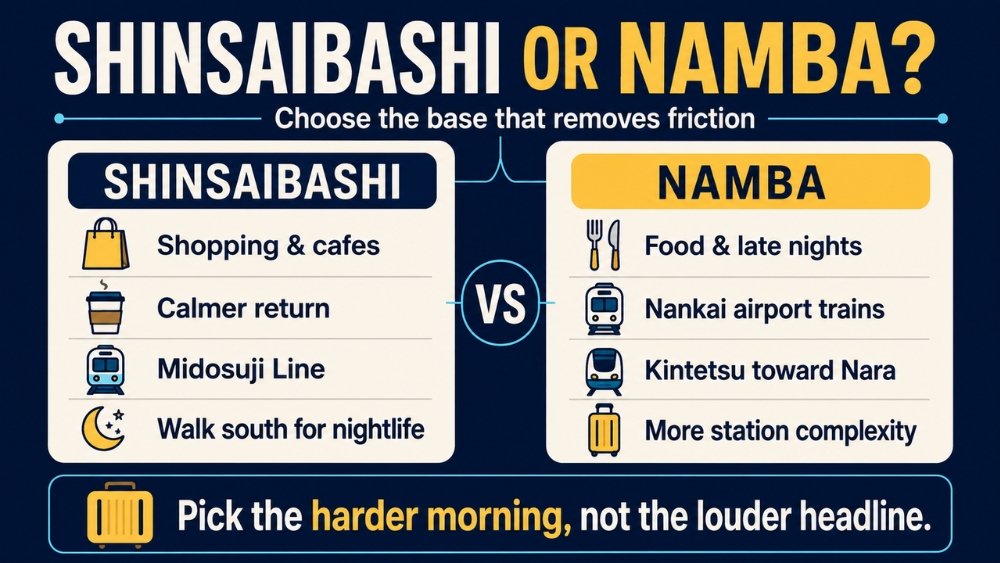
For many first-time visitors, either area works. Choose Shinsaibashi for shopping, cafes, and a somewhat calmer return after dinner. Choose Namba for Dotonbori, late evenings, the Nankai airport train, and Kintetsu services toward Nara.
| Your priority | Check first | Main trade-off |
|---|---|---|
| Shopping, cafes, and a more orderly base | Shinsaibashi | Less convenient for Nankai airport trains |
| Food, nightlife, and late returns on foot | Namba | Busier streets and more potential noise |
| Direct Midosuji Line travel to Umeda or Shin-Osaka | Either | The exact hotel-to-station walk still matters |
| Kansai Airport by Nankai or Nara by Kintetsu | Namba | “Namba Station” means several different stations |
Where Shinsaibashi and Namba actually begin
Shinsaibashi is generally north of Dotonbori, centered on Shinsaibashi Station and the covered Shinsaibashi-suji shopping arcade. It includes department stores, fashion brands, cafes, side streets, and Amerikamura to the west.
Namba is broader and less tidy as a map label. Most visitors mean the district around Dotonbori, Hozenji Yokocho, Osaka Metro Namba, Osaka-Namba, Nankai Namba, and the commercial streets south of the canal. It has Osaka’s densest mix of casual dining, entertainment, shopping, and transport connections.
Dotonbori sits between the two in practical travel terms. A hotel described as “Namba” can be closer to Shinsaibashi Station than to Nankai Namba. Check the entrance-to-platform route for the railway you will actually use, not only the neighborhood name.
Shinsaibashi vs Namba: the quick choice
Choose Shinsaibashi if shopping, cafes, and a slightly more orderly hotel base matter most. Osaka Metro’s official station information shows Shinsaibashi on both the Midosuji Line and Nagahori Tsurumi-ryokuchi Line. The Midosuji Line connects it directly with Shin-Osaka, Umeda, Namba, and Tennoji.
Choose Namba if you want to be closest to Dotonbori’s dining streets, expect late evenings, or need the simplest rail link to Kansai International Airport or Nara. Nankai’s current timetable guide lists its airport services from Nankai Namba, while Kintetsu’s official route guide shows the Osaka-Namba–Kintetsu-Nara corridor.
If hotel prices are similar, couples and light sleepers often benefit from staying a few blocks north of Dotonbori in Shinsaibashi. Travelers arriving with large luggage or planning several late food outings may prefer Namba. In both cases, one quiet side street can matter more than the district label.
Concrete places that make Shinsaibashi practical
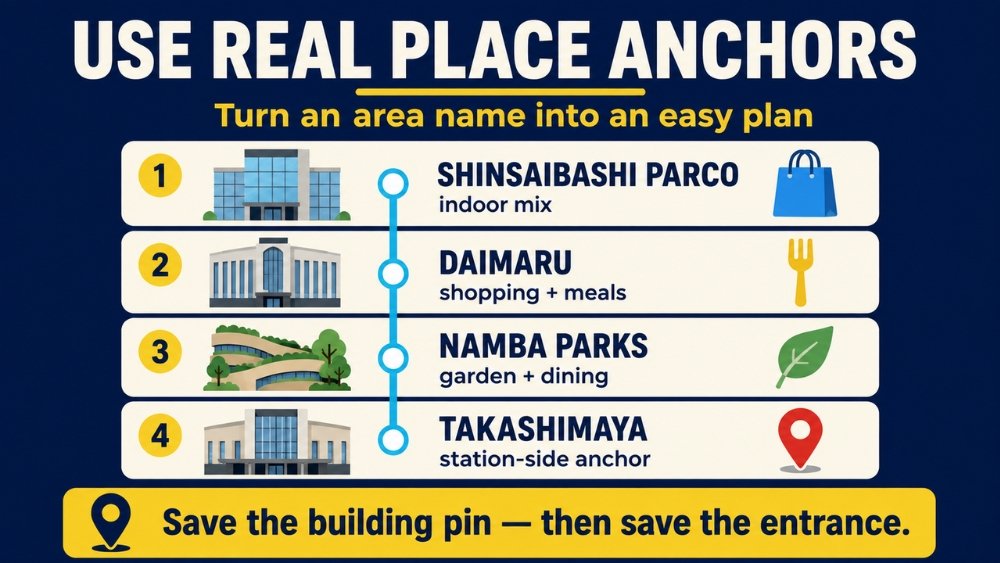
These are useful anchors rather than a claim that every traveler should visit them. They were selected for a current first-party presence, a clear role in the neighborhood, and strong current Google feedback with meaningful review volume. Ratings and hours change; use the map link to check the latest comments and the official page for operating details.
If Shinsaibashi fits your trip, compare current Shinsaibashi hotel prices and availability on Klook. Klook lets you switch the displayed language and currency, which can make it easier to review options in a familiar format. Check the exact property address, room category, cancellation terms, taxes, and final total before booking.
Shinsaibashi PARCO: an indoor culture, shopping, and dining anchor
Shinsaibashi PARCO is directly beside Shinsaibashi Station and works well when a group wants fashion, character stores, exhibitions, and food without splitting across several streets. Its official facility page lists separate hours for retail and food floors, and warns that individual stores can differ.
This is a practical rainy-day or hot-weather fallback, not a quiet local mall. Popular floors can be crowded, and a specific shop or restaurant may close earlier than the building. Check the tenant page on the day. Google Maps
Daimaru Shinsaibashi: department-store shopping with dependable meal options
Daimaru Shinsaibashi is connected to the same central shopping block. The official English page lists fashion and tax-refund services alongside a restaurant floor and basement food hall; the current schedule varies by floor.
It is useful when you want a sit-down meal, gifts, cosmetics, or food-hall browsing in one building. It is less useful as a late-night destination because retail floors close earlier than some restaurant spaces. Google Maps
HOTEL THE FLAG Shinsaibashi: a concrete hotel example away from the canal edge
HOTEL THE FLAG Shinsaibashi is a well-reviewed example on the east side of the shopping district. Its official access page places the property in Higashishinsaibashi, within walking distance of Shinsaibashi Station and the main arcade.
It suits travelers who want central access without sleeping directly beside the Dotonbori canal. The surrounding streets still contain restaurants and bars, so read recent room-specific noise comments rather than assuming every Shinsaibashi address is quiet. Google Maps
Check current rooms and prices for HOTEL THE FLAG Shinsaibashi on Klook.
Concrete places that make Namba practical
If Namba fits your trip, compare current Namba hotel prices and availability on Klook. Check the exact Namba station operator, property address, room category, cancellation terms, taxes, and final total before booking.
Namba Parks: shopping, restaurants, and breathing room south of the station
Namba Parks sits immediately south of Nankai Namba. It combines shops and restaurants with elevated outdoor garden spaces, making it a useful reset when central Namba feels visually intense. Nankai also identifies Namba Parks as one of the commercial facilities connected to its Namba offers.
The garden does not make the entire complex quiet, and different tenants keep different hours. Use the official directory to confirm the restaurant you want rather than relying on the mall’s general hours. Google Maps
Osaka Takashimaya: the easiest department-store anchor at Nankai Namba
Osaka Takashimaya is attached to the Nankai Namba complex. It is useful for food-hall purchases, gifts, and a sit-down dinner without wandering through Dotonbori. The store and its upper dining floors do not necessarily share the same closing time, so check the specific floor and restaurant before making a late plan.
This is a strong meeting point for travelers arriving on different trains, but “at Takashimaya” is still vague inside a large building. Save a floor or entrance as well as the building pin. Google Maps
Swissôtel Nankai Osaka: the clearest airport-train hotel example
Swissôtel Nankai Osaka sits above Nankai Namba. Its official access instructions route guests from the Nankai third-floor north ticket gate into the hotel, making it the clearest example of paying more for a very simple airport-train connection.
It suits an early departure, late arrival, or heavy luggage. It does not solve every Namba transfer equally: Osaka-Namba and JR Namba are separate stations, and the premium location can carry a premium room price. Google Maps
Check current rooms and prices for Swissôtel Nankai Osaka on Klook.
Hotels: quieter in Shinsaibashi, livelier in Namba
Shinsaibashi has business hotels, mid-range properties, and higher-end hotels. Streets immediately around the arcade can stay busy, but the atmosphere often becomes calmer north or east of the canal. Hotels near Nagahoribashi or Yotsubashi can offer a useful compromise: walkable to the main sights without being directly above the busiest crowds.
Namba hotels can be extremely convenient, but location matters more. Rooms close to Dotonbori, Ebisubashi, or restaurant streets may have street noise, delivery traffic, and people outside late. That is an advantage if you want to be in the center of the action and a limitation if you are a light sleeper or leaving early.
For a quieter Namba stay, compare properties south of Nankai Namba, toward east Namba and Nippombashi, or west toward Minatomachi. Read recent comments for external and internal noise. A hotel can be one narrow street away from a lively bar block.
Transportation and station access
Shinsaibashi Station is relatively simple by central Osaka standards. It serves the Midosuji Line and Nagahori Tsurumi-ryokuchi Line. Osaka Metro’s official Shinsaibashi station page provides the current station map and accessibility facilities.
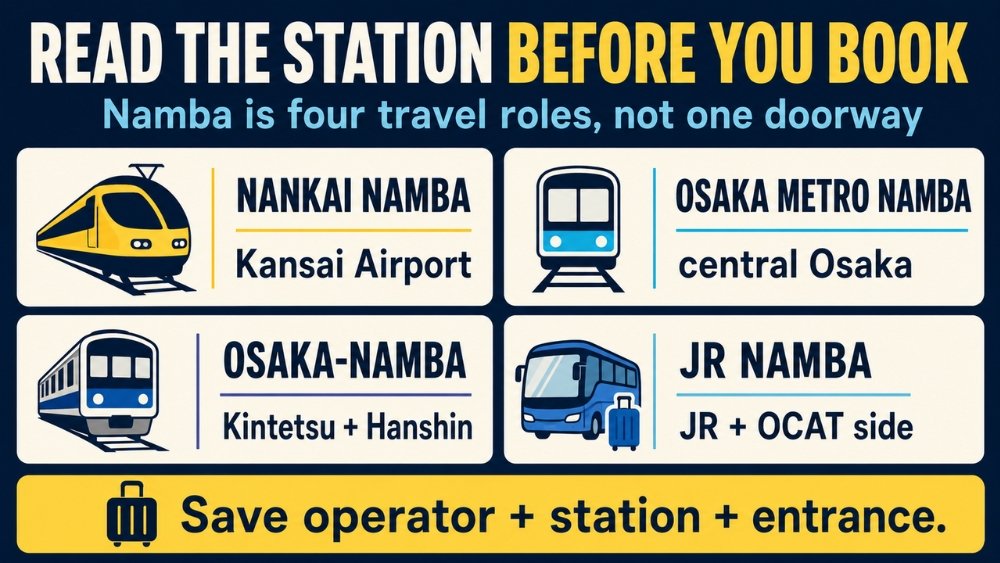
Namba is more connected and more confusing. Four different station names matter:
- Osaka Metro Namba serves the Midosuji, Yotsubashi, and Sennichimae lines.
- Nankai Namba is the practical terminal for Nankai airport trains.
- Osaka-Namba serves Kintetsu and Hanshin, including routes toward Nara.
- JR Namba sits farther west below OCAT.
The stations connect through underground passages and surface streets, but the walk can take longer than expected. JR Namba is the most common surprise because it is not beside the Dotonbori canal or Nankai platforms. Save the exact operator and entrance before leaving your hotel.
Food, nightlife, and how crowds feel
Namba has the stronger concentration of casual Osaka dining. Takoyaki, okonomiyaki, kushikatsu, ramen, sushi, yakiniku, and dessert shops sit within a short walk, but the most visible businesses can have long queues. Namba Parks and Osaka Takashimaya provide useful indoor alternatives when you prefer a directory, seats, and clearer operating information.
Shinsaibashi has plenty of food, but it is distributed across shopping streets, department-store floors, basement food halls, cafes, and side streets. PARCO and Daimaru are easy anchors for a mixed group; smaller restaurants east and west of the arcade provide more variety but require more checking.
For popular restaurants, reservations are worth considering on Friday and Saturday evenings. Small independent places may have limited English, short menus, cash-only payment, or no-photo rules. Check the entrance, respect posted instructions, and do not block a narrow lane while deciding.
Dotonbori is busiest from late afternoon into the evening, especially on weekends and holidays. Do not schedule a tight station transfer or taxi pickup through its center. Walk to a wider road or use a clearly named building as the meeting point.
Shopping: what each area does better
Shinsaibashi is the clearer choice for fashion, cosmetics, department stores, sneakers, and international labels. The covered arcade helps in rain and summer heat, while Amerikamura adds streetwear, vintage clothing, and a younger atmosphere.
Namba is stronger for variety and convenience: electronics, drugstores, discount shops, souvenirs, arcades, department stores, and covered streets. It is easy to combine shopping with dinner, but the visual intensity and station complexity can be tiring.
Larger stores usually accept international cards. Keep some cash for small eateries and older shops. Tax-free rules vary by store, so carry your passport and allow time for the procedure before closing.
Which area works best for different trips?
For a first Osaka visit of two or three nights, Shinsaibashi is often the easier all-around base. You can walk south to Dotonbori and Namba, then return to streets that may feel less intense after dinner. It also keeps Umeda and Shin-Osaka simple on the Midosuji Line.
Namba is better when the trip includes a Nankai airport arrival or departure, a Kintetsu day trip toward Nara, or several late evenings in Minami. It also minimizes the walk after dinner if the restaurants and entertainment you want are concentrated near Dotonbori.
Families should look beyond the area label. A quiet room, laundry, elevator access, and a short route from the correct station are usually more valuable than being beside the canal. Travelers with mobility concerns should confirm an elevator route from platform to street; underground stairs and crowded pavements can matter more than straight-line distance.
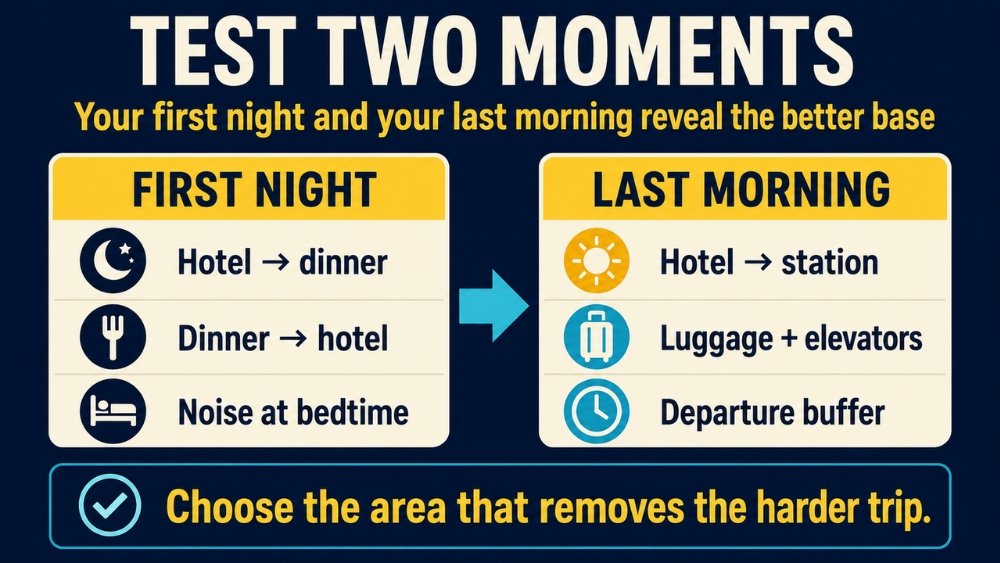
Before booking, place the hotel entrance, arrival station, and two planned destinations on one map. Then test the route for your first evening and final morning. The better district is usually the one that removes one difficult transfer or one noisy late-night walk from your actual trip.
The simple answer
Choose Shinsaibashi for shopping, cafes, and a more polished base. Choose Namba for food, nightlife, the Nankai airport train, and Kintetsu access toward Nara. Do not treat the boundary as a wall: the two areas are close enough to share, and the exact hotel block and station entrance will usually matter more than the neighborhood name.