
Osaka rarely becomes completely silent. Trains pass, cyclists use river paths, worshippers visit shrines, and local families share the parks. A more useful goal is a place with more space, fewer decisions, and a slower pace than Dotonbori, Osaka Station, or a packed shopping street.
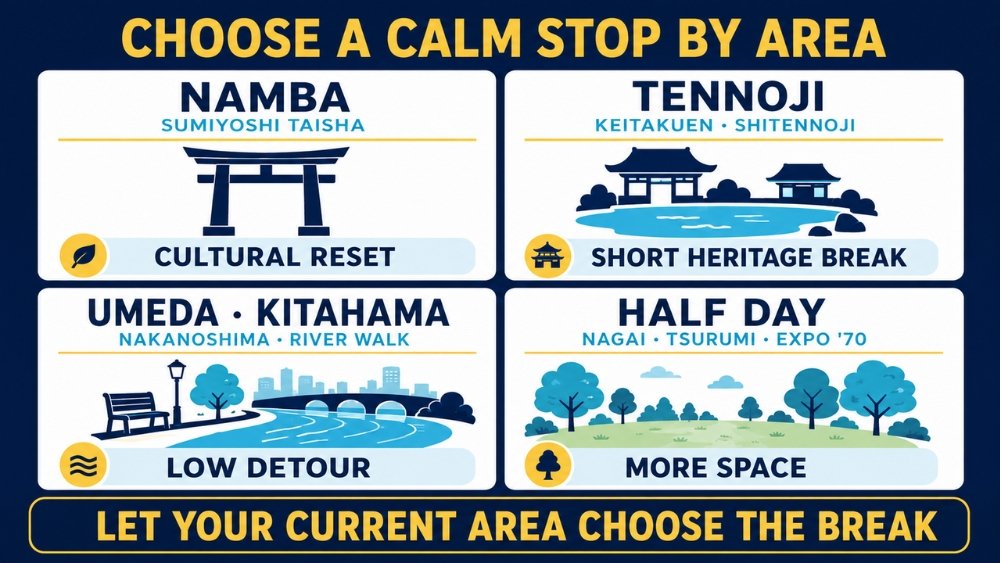
The best calm stop is usually not the most remote one. It is the one that fits your route. From Namba, Sumiyoshi Taisha is a practical cultural reset. Around Tennoji, choose Shitennoji or Keitakuen Garden. From Umeda, Yodoyabashi, or Kitahama, use the Nakanoshima or Kema Sakuranomiya riverfront. For a planned half-day outdoors, look farther out to Nagai Botanical Garden, Tsurumi Ryokuchi, or Expo ’70 Commemorative Park.
| Starting point or need | Best first choice | Main caution |
|---|---|---|
| Namba and a cultural stop | Sumiyoshi Taisha | Festivals and New Year are not quiet |
| Tennoji and a contained garden | Keitakuen Garden | Paid entry and fixed opening hours |
| Tennoji and temple atmosphere | Shitennoji | The 21st and 22nd are busy market days |
| Honmachi or Awaza | Utsubo Park | Lunch, rose season, and tennis events add activity |
| Yodoyabashi or Kitahama | Nakanoshima Park | Rose seasons and events attract visitors |
| A longer central river walk | Kema Sakuranomiya Park | Cherry-blossom season is extremely popular |
| A plant-focused outing | Nagai Botanical Garden | Admission, seasonal hours, and closing days |
| A large park reached by subway | Tsurumi Ryokuchi | Sports and family zones can be lively |
| Osaka Castle without only following crowds | Outer park routes | Main approaches remain busy |
| A half-day outside central Osaka | Expo ’70 Commemorative Park | Check events, admission, and closing days |
First decide what “quiet” needs to solve
Different travelers need different kinds of relief. A shaded bench may solve heat and sensory overload, but it will not help during heavy rain. A garden with controlled entry may feel calmer than an open park, but it creates a ticket and closing-time constraint. A shrine or temple can offer a slower atmosphere, yet it remains an active place of worship rather than a private rest area.
Choose the problem before the place:
- Too much noise or visual stimulation: try a garden, temple precinct, or outer park path.
- Physical fatigue: prioritize a known seat, toilet, and short route back to transport.
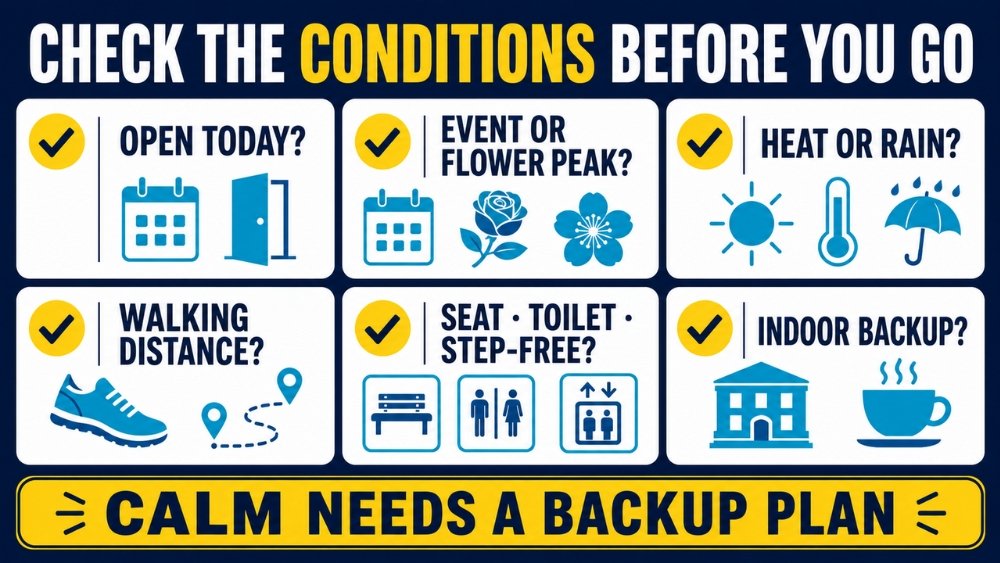
- Heat or rain: keep an indoor cafe, museum, or station building as a backup.
- Luggage or a stroller: avoid steep bridges, gravel shortcuts, and long loops without checking access.
- A quiet conversation or phone call: use a venue where speaking is appropriate, not a prayer area or compact garden.
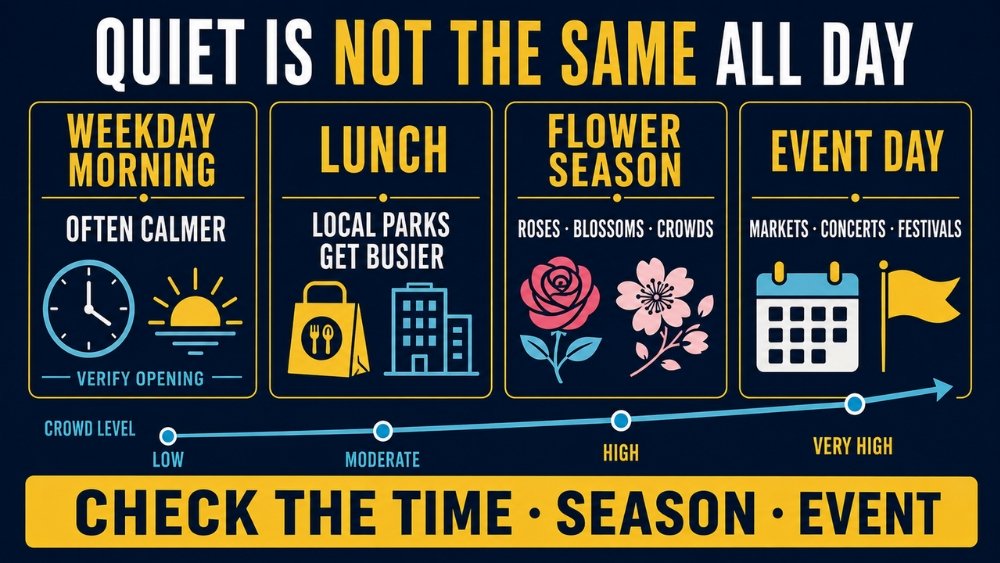
Quietness changes by hour and season. Weekday mornings are often calmer, but commuters use central paths. Lunch brings office workers into Utsubo and Nakanoshima. Cherry blossoms, rose seasons, temple fairs, concerts, and school holidays can completely change the atmosphere.
1. Sumiyoshi Taisha: the easiest cultural reset from Namba
Sumiyoshi Taisha works well when you want a traditional setting without crossing central Osaka. Nankai trains connect Nankai Namba Station with Sumiyoshi Taisha Station, and the shrine is also served by the Hankai tram. The famous Sorihashi bridge attracts attention, but the grounds extend beyond that single viewpoint.
This is an active shrine. Keep voices low near worship areas, do not block the approach, and follow signs around restricted spaces. The steep arched bridge is not the only route through the grounds; travelers with mobility concerns should use the flatter approach.
Do not choose Sumiyoshi for calm during hatsumode, the first shrine visits of the New Year, or during major rites and festivals. For detailed access and a realistic visit length, use our Sumiyoshi Taisha guide.
Best fit: 45–75 minutes from Namba, especially on an ordinary weekday morning.
Plan it: Sumiyoshi Taisha official English site · Google Maps
2. Shitennoji: spacious temple grounds near Tennoji
Shitennoji offers a cultural break close to Tennoji’s transport and commercial area. The precinct includes open approaches and separately managed inner areas, so a short outer-ground visit and a paid garden or temple visit are different experiences.
The key planning detail is the calendar. Shitennoji holds busy activity around the 21st and 22nd of each month. Those dates can be interesting if you want a market atmosphere, but they are the wrong choice when calm is the priority. Shitennoji-mae Yuhigaoka on the Osaka Metro Tanimachi Line is the most direct station for many visitors. Tennoji Station is also possible, but the longer walk reduces the value of a short recovery stop.
Best fit: a weekday morning when you are already sightseeing around Tennoji.
Plan it: Shitennoji official site · Official event calendar · Google Maps
3. Keitakuen Garden: a contained break in Tennoji Park
Keitakuen is a compact Japanese strolling garden beside the Osaka City Museum of Fine Arts in Tennoji Park. Its pond, planted slopes, and controlled paths make it easier to slow down than in the open entertainment areas around Tennoji.
Unlike a public riverside path, the garden has admission, opening hours, and closing days. Check the garden’s own notice page on the day; maintenance and special openings can alter access. Allow roughly 30–45 minutes. This is a place for walking and looking rather than picnicking, energetic play, or a long phone call. Stay on the marked paths and follow current photography rules.
Best fit: travelers who want a low-effort garden stop beside Tennoji rather than a long park walk.
Plan it: Keitakuen official English site · Google Maps
4. Utsubo Park: a local green corridor near Honmachi
Utsubo Park is a long urban park between Honmachi and Awaza. It is useful precisely because it is not a must-see monument: office workers, residents, dog walkers, and families use it as everyday public space.
The eastern and western sections feel different, and the nearest station exit depends on which end you want. Do not type only the park name into a map and accept the first route. Save the exact section, nearest exit, and next destination.
Lunch hours, rose seasons, tennis activity, and weekend events can make some parts lively. If one path feels crowded, continue toward another bench rather than expecting the central rose area to be empty.
Best fit: a 30–60 minute reset between central Osaka appointments or sightseeing stops.
Plan it: Osaka City park information · Google Maps
5. Nakanoshima Park: a no-detour riverside pause
Nakanoshima Park is the most convenient calm-ish option for travelers already near Yodoyabashi, Kitahama, Osaka City Hall, or the eastern side of Umeda. The island sits between the Dojima and Tosabori rivers, with lawns, paved paths, and a rose garden.
The central rose sections can be busy when flowers are at their best. Walk east or west from the busiest cluster if you want more space. Naniwabashi, Kitahama, and Yodoyabashi stations serve different parts, so choose the exit that supports your next move.
This is an outdoor break. In heavy rain, extreme heat, or cold wind, a nearby cultural building or cafe is a better recovery plan. Our Osaka cafe guide includes named alternatives and map links.
Best fit: 20–45 minutes when you are already in central northern Osaka.
Plan it: Osaka City park information · Google Maps
6. Kema Sakuranomiya Park: more room for a river walk
Kema Sakuranomiya Park follows the Okawa River and works better than Nakanoshima when you want to keep walking rather than sit in one compact area. Temmabashi and Sakuranomiya offer different starting points; decide whether you want an out-and-back walk or a one-way route between stations.
The park is famous for cherry blossoms. In late March and early April, it is a crowd destination, not an escape from crowds. Outside peak bloom, the long riverbank gives you more opportunity to move away from a busy patch. Trains, roads, boats, and runners remain part of the soundscape.
Carry water in warm weather and keep enough energy for the return station. The city’s park page notes that the riverside park is always open, while individual facilities can have their own hours.
Best fit: a flexible 45–90 minute walk outside peak cherry-blossom season.
Plan it: Osaka City park information · Google Maps
7. Nagai Botanical Garden: a planned plant-focused visit
Nagai Botanical Garden gives you a more defined destination than an open city park. It suits travelers who want seasonal plants, broad paths, and a slower outdoor morning rather than another central attraction.
The garden is reached through Nagai Park from Nagai Station. Admission, hours, and closing days apply, so check the garden’s own calendar before leaving. Evening teamLab operations are a separate ticketed experience with their own schedule and atmosphere; do not assume that a daytime garden plan continues unchanged after sunset.
Allow at least 60–90 minutes after reaching the entrance. The route from the station, weather exposure, and size of the grounds make this a deliberate outing rather than a quick coffee-break substitute.
Best fit: a morning or early-afternoon nature stop with enough time for the station-to-gate walk.
Plan it: Nagai Botanical Garden official site · Google Maps
8. Tsurumi Ryokuchi: space without leaving Osaka City
Tsurumi Ryokuchi is a very large public park served directly by Tsurumi-ryokuchi Station on the Nagahori Tsurumi-ryokuchi Line. Lawns, water, flower areas, and sports facilities spread activity across a much larger site than a central pocket park.
“Large” does not mean every zone is quiet. Playgrounds, sports areas, family lawns, and event venues can be energetic. Use the official park map to choose one section rather than trying to cover everything. Bring water, identify toilets before walking far from the station area, and keep a weather plan.
Best fit: travelers who want open space and simple subway access, not a compact heritage site.
Plan it: Tsurumi Ryokuchi official park site · Google Maps
9. Osaka Castle Park’s outer routes: calm without skipping the landmark
The castle tower approach is one of Osaka’s busiest sightseeing corridors. The wider park, however, has outer moats and longer peripheral routes that can feel less compressed than the central approach.
Enter from the side that supports your itinerary. Morinomiya, Osakajokoen, and Tanimachi 4-chome lead to different edges; none is automatically best for every route. Do not promise yourself calm during cherry-blossom season, major events, or the midday tour-group period. If the main route is packed, enjoy an outer walk and decide separately whether the tower queue is worth it.
Best fit: mixed-interest groups that want the castle area and a less crowded walking segment.
Plan it: Osaka Castle Park official English guide · Google Maps
10. Expo ’70 Commemorative Park: the half-day space option
Expo ’70 Commemorative Park in Suita is the largest commitment on this list. It offers broad lawns, wooded paths, garden areas, and major cultural landmarks, but the transfer to the Osaka Monorail and the size of the grounds make it a half-day plan.
Use Banpaku-kinen-koen Station and check the park calendar before traveling. Concerts, festivals, and seasonal programs can make arrival areas busy. Admission, closing days, and standard hours apply to the Natural and Cultural Gardens and Japanese Garden; individual facilities may differ.
Choose one or two zones rather than crossing the whole park without a plan. Save the exit station, return route, and final admission time before entering.
Best fit: three to four hours including transport when open space is a priority.
Plan it: Expo ’70 Park official English access page · Google Maps
How to build a calm break without losing the day
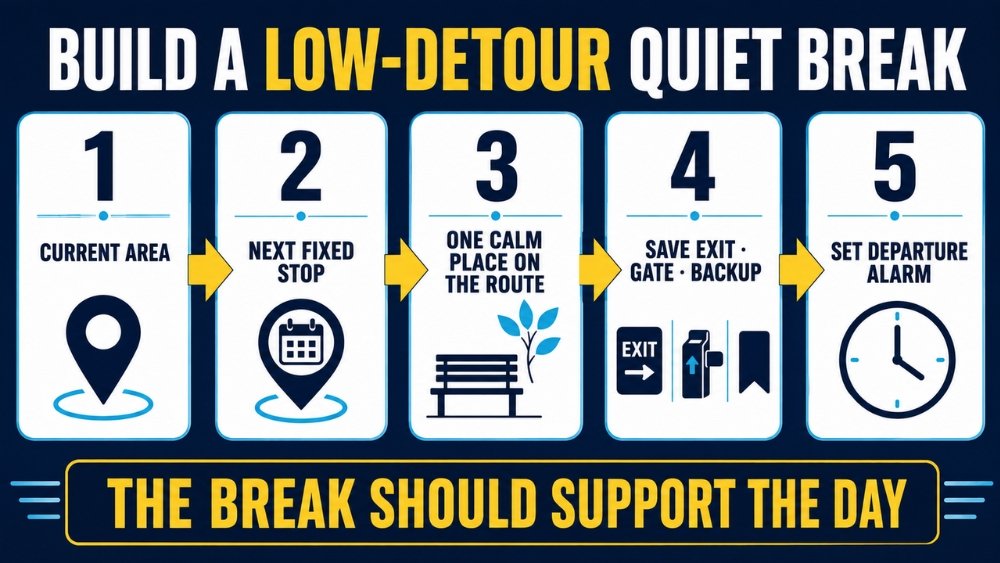
Use a simple sequence:
- Mark your current area and the next fixed commitment.
- Choose a calm stop on that route, not on the opposite side of Osaka.
- Open both the official information and Google Maps links above; check today’s hours, notices, weather, and last admission.
- Save the exact station exit, park gate, or garden entrance.
- Keep one indoor backup and one nearby outdoor backup.
- Set a departure alarm with enough time to reach the next platform or reservation.
Use an IC card—a rechargeable tap-to-pay transit card such as ICOCA—to reduce ticket-machine decisions, but keep another payment method for admission counters and small purchases. If rain is likely, combine this guide with our Osaka rainy-day itinerary rather than forcing an exposed river walk.
Public parks, shrines, and gardens are shared spaces. Keep music off, avoid long calls near worship or contemplation areas, do not block paths, and take litter with you. If you need guaranteed seating, charging, air-conditioning, or a private call, choose an appropriate paid indoor venue instead.
The useful question is not “Where is Osaka silent?” It is “Where can I recover without creating another travel problem?” Pick the nearest suitable format, verify the current conditions, and let the break support the rest of the day.